


Foot and ankle pain assessment and treatment

Get a clear explanation of your symptoms and next steps
Targeted ankle pain assessment for sprain, tendon, impingement, and nerve-related symptoms.
Diagnosis first
We identify the likely pain source before treatment
Personal plan
Treatment options matched to your goals
Suitable for new or persistent ankle pain, including sprains, instability, tendon pain, and movement-related symptoms.
Foot and ankle assessment with or without an ultrasound scan.
Get answers for ankle pain and the right treatment path
our podiatrists identify whether your ankle pain is linked to ligament, tendon, joint, or nerve irritation so you can recover with a clear plan.
Recommended appointment to book
Foot and ankle assessment with or without an ultrasound scan.
What to expect at your appointment
You will leave with a straightforward diagnosis, treatment options explained in plain language, and clear next steps.
Why patients choose our podiatrists
- Cause-led diagnosis rather than generic advice
- Clear rehab milestones for return to activity
- Plan adjusted to daily demands and sport
- Support from the same clinic team throughout
Foot and ankle injuries we assess
We assess a range of foot, ankle and lower-leg injuries and conditions, including:
- Plantar fasciitis
- Ankle sprain injuries
- Achilles tendinopathy
- Peroneal tendinopathy
- Posterior tibial tendinopathy
- Calf muscle tears or injuries
- Suspected foot and ankle fractures
- Osteoarthritis of the foot and ankle
- Gout and other rheumatological conditions
- Medial tibial stress syndrome (shin splints)
How we diagnose
Assessment may include history, examination, movement testing, and where appropriate imaging to confirm the diagnosis.
Treatment pathways
Treatment is tailored to your goals and may include load management, exercise prescription, manual therapy, orthotic support, and escalation options where clinically indicated.
When to book
If symptoms are worsening, affecting daily activity, or returning despite self-care, book an assessment for a clear plan.
From the clinic journal
More about foot and ankle care
Your free ankle pain guide
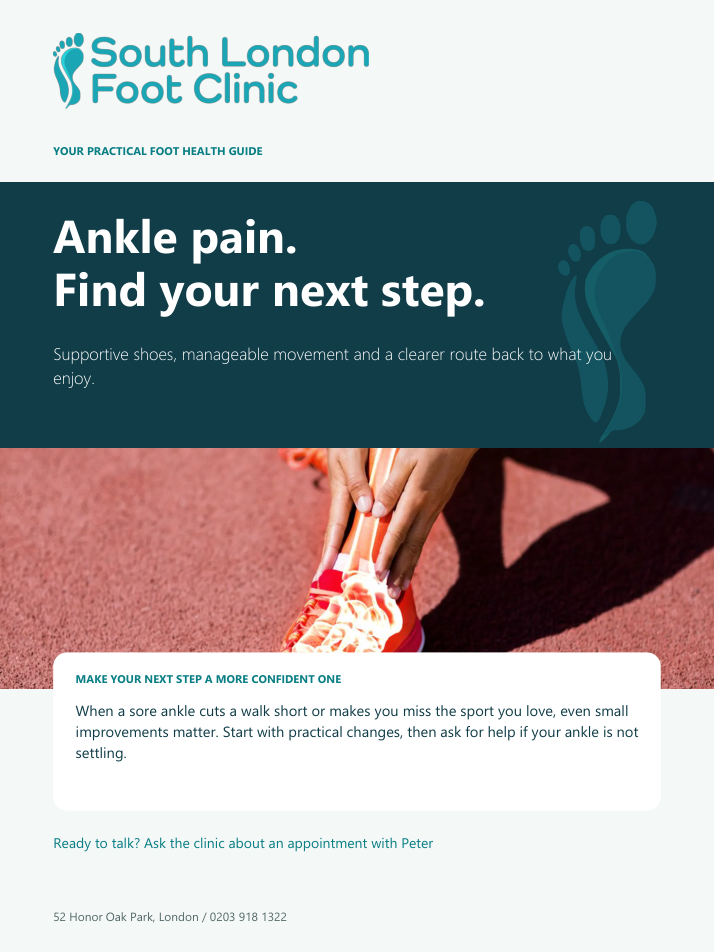
Ankle pain. Find your next step.
Supportive shoes, manageable movement and a clearer route back to what you enjoy.
- Start with stable footwear
- Keep moving within comfort
- If it persists, get it assessed
5 helpful pages. Yours to read and keep.
Ready to talk? Book an assessment or ask about seeing Peter.

A clearer next step starts with a conversation.
Peter Gauntlett & the South London Foot Clinic team
"I left with a clear diagnosis and a practical treatment plan I could start right away."

"Friendly clinicians, clear explanations, and treatment that focused on the root cause."
"The team explained every step and adjusted the plan to fit my day-to-day activity level."
"Booking was simple and the follow-up guidance helped me recover with confidence."


Your questions, answered
Your ankle pain questions
Explore assessment, recovery and when imaging may help.
Browse all questions ↗Can a podiatrist help with ankle sprains?
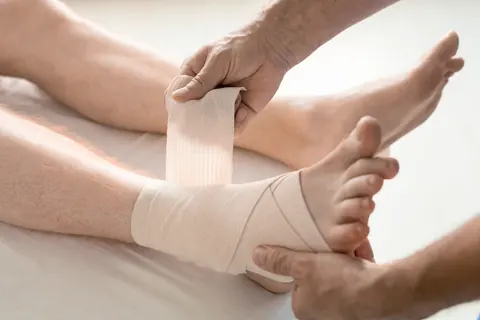
Yes. Podiatrists who specialise in musculoskeletal injuries can assess ankle sprains, identify possible ligament or tendon injuries and develop an appropriate rehabilitation programme.
Treatment may involve exercises to restore movement, strength, balance and ankle stability.
Some clinics also use diagnostic ultrasound to examine injured ligaments and tendons where clinically appropriate.
Can ultrasound help diagnose foot and ankle injuries?
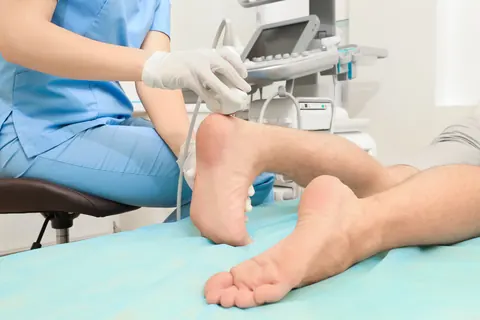
Yes. Diagnostic musculoskeletal ultrasound can help assess many soft-tissue structures, including tendons, ligaments, plantar fascia and some joint abnormalities.
It allows the podiatrist to examine structures dynamically while the foot or ankle moves.
Ultrasound does have limitations, particularly for deep bone and bone marrow problems. MRI, X-rays or other investigations may sometimes be necessary.
Ask About Ankle Pain Treatment London - Diagnosis and Rehabilitation
Our team can help you choose the most suitable appointment and explain likely treatment pathways.


