


“Lewawi was very helpful and patient when I had my treatment! Explained everything clearly and was supportive. Happy with the service and would recommend.”

Your care at South London Foot Clinic
Clear nail surgery options with practical recovery guidance
our podiatrists assess painful ingrown nails carefully and explain when nail surgery may be the best option, with clear aftercare and support through healing.
What to expect at your appointment
We explain all options first, including conservative care, so you can choose confidently and understand recovery time before treatment.
Why patients choose our podiatry team
- Clear options before any procedure
- Local anaesthetic for comfort during treatment
- Step-by-step dressing and healing advice
- Follow-up aimed at reducing recurrence risk
How this assessment helps
Nail surgery Lewisham treatment at South London Foot Clinic provides a safe and effective option for painful ingrown nails when conservative care has not worked or is unlikely to settle the problem.
Who this treatment is for
Best for painful ingrown toenails, whether recent, recurring, infected, or becoming difficult to manage with shoes, work, or activity.
What happens at your appointment
We assess severity, infection signs, nail shape, and treatment history before advising conservative care or a minor surgical option with local anaesthetic.
Benefits and expected outcomes
You receive clear before-and-after guidance, realistic healing timelines, and practical support to reduce recurrence risk.
- Procedure options explained in plain language
- Comfort-focused care with local anaesthetic
- Written aftercare guidance and dressing advice
- Review appointments to monitor healing
Next steps
Book online for an assessment with Peter Gauntlett or Lewawi Endalew, or call 0203 918 1322 for help choosing the right appointment. Book online now.
Ask About Nail Surgery London
Your free nail surgery guide
Nail surgery. Know what to expect.
A preparation and aftercare conversation guide for a recurring painful nail.
- Understand what is proposed
- Plan the practicalities
- Discuss risks and follow-up
4 helpful pages. Yours to read and keep.
Ready to talk? Book an assessment or ask about seeing Peter.
FREEPDF guide
A clearer next step starts with a conversation.
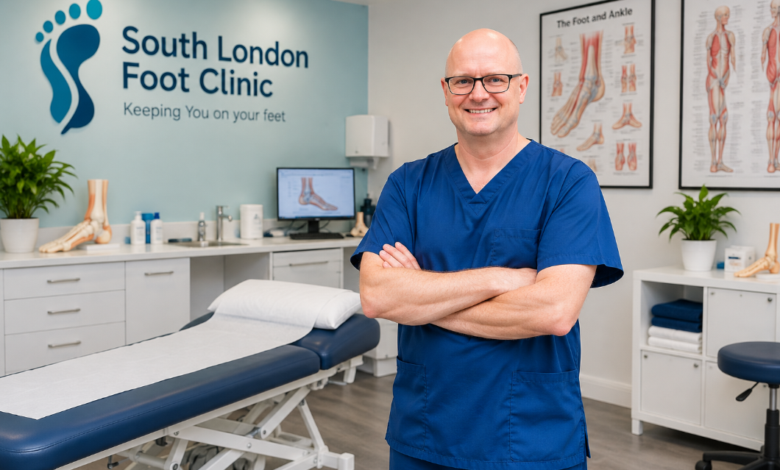
Peter Gauntlett & the South London Foot Clinic team
Patient feedback
In their own words
“Peter is an incredibly attentive and knowledgeable podiatrist. He kept me informed at every stage of my treatment and followed up thoroughly. I highly recommend South London Foot Clinic and Peter!”
“She explained how the corn formed and explained what she would do to remove it. She worked quickly causing minimal discomfort, applied an antiseptic and bandaged the area when she had finished.”
“Excellent care and professional treatment for my knee pain. The therapy was highly effective, and I noticed a significant improvement in both pain and mobility. Thank you Peter”
“Had a great experience at the South London Foot Clinic! Peter was friendly and attentive, he gave a thorough diagnosis and I'm already seeing massive improvements after experiencing foot pain. Would highly recommend!”
“The lady was absolutely fantastic kind and asked some questions to ensure I was treated correctly and the lady checked again if was fit to leave and if i was still experiencing any more pain before i left.”
“After they had explained the problem they talked me through the procedure. Everything was very clear and thorough. After the procedure my toe was carefully dressed and I was given after care instructions.”
“Overall, it was a good visit and experience. Definitely recommending this clinic and podiatrist Peter.”

Your questions, answered
Nail surgery, explained
Understand the procedure, your options and what recovery can involve.
Browse all questions ↗Non-surgical options ↗Surgery without phenol ↗What is an ingrown toenail?
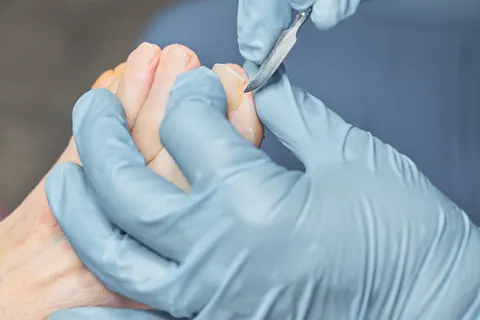
An ingrown toenail occurs when the edge or corner of a toenail presses into or penetrates the surrounding skin.
This can cause pain, redness, swelling and sometimes infection. Ingrown toenails are most common in the big toes, although they can affect any toe.
Common causes include poorly fitting shoes, cutting toenails too short, naturally curved nails and injury to the nail.
What happens during ingrown toenail surgery?
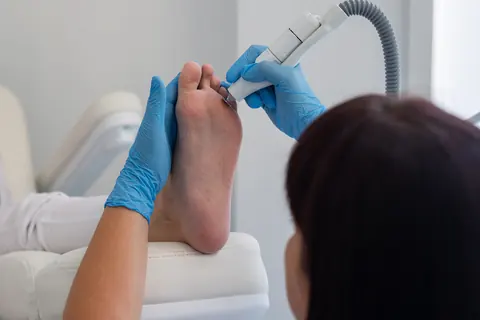
Ingrown toenail surgery is a minor procedure performed under local anaesthetic.
The podiatrist numbs your toe before carefully removing the troublesome section of nail. In some cases, the entire nail may need to be removed.
Depending on the condition of your nail and your preferences, treatment may involve removing the nail with or without applying phenol to prevent regrowth.
You can usually return home shortly after the procedure.
Does ingrown toenail surgery hurt?
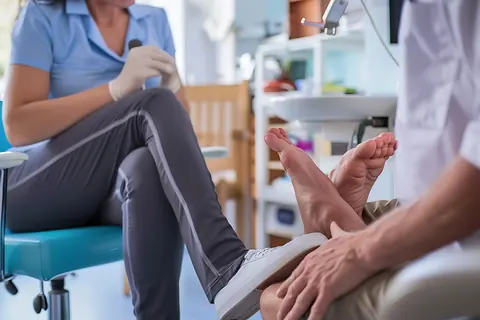
The local anaesthetic injections can cause a brief stinging or uncomfortable sensation. Once the anaesthetic has taken effect, the toe becomes numb, allowing the procedure to be performed without sharp pain.
You may still notice some pressure or movement during treatment.
Once the anaesthetic wears off, some discomfort is normal and can usually be managed with appropriate pain relief and aftercare.
What is phenolisation in ingrown toenail surgery?
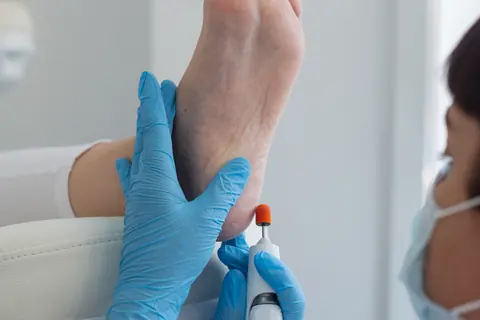
Phenolisation is a technique used to reduce the likelihood of an ingrown toenail returning.
After the troublesome section of nail has been removed, a chemical called phenol is carefully applied to the corresponding part of the nail matrix, which is the tissue responsible for producing new nail.
Phenol damages this specific part of the matrix, helping to prevent the removed section of nail from growing back.
The remaining nail usually continues to grow normally, although it will be slightly narrower.
How long does an ingrown toenail take to heal after surgery?
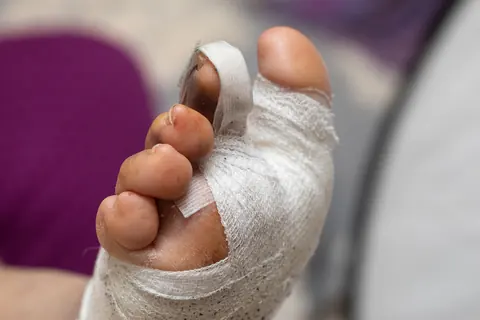
Healing depends on the procedure performed, your general health and how carefully the toe is looked after.
Following partial nail surgery with phenol, healing commonly takes approximately four to six weeks, although some patients heal sooner and others take longer.
Procedures without phenol may heal more quickly, but the removed nail can subsequently regrow.
Your podiatrist will provide instructions about dressings, keeping the wound clean, footwear and returning to normal activities.
Book an appointment
Need help choosing the right treatment?
Our team can help you choose the most suitable appointment and answer questions about treatment options and booking.


