


“Lewawi was very helpful and patient when I had my treatment! Explained everything clearly and was supportive. Happy with the service and would recommend.”

Your care at South London Foot Clinic
Shockwave therapy matched to the tissue we are treating
Our podiatrists use shockwave therapy for selected stubborn tendon and heel pain presentations, choosing radial or focused energy according to the diagnosis, tissue depth, and clinical goal.
What to expect at your appointment
Your appointment includes a diagnosis-first assessment, clear discussion of whether shockwave is appropriate, and a plan that combines treatment options with rehabilitation rather than treating shockwave as a stand-alone fix.
Why patients choose our podiatry team
- Clear explanation of radial versus focused shockwave
- Suitability checked before any treatment course starts
- Session planning linked to exercises and load management
- Aftercare guidance for work, walking, and sport
How this assessment helps
Ask About Shockwave Therapy London
Your free shockwave therapy guide
Considering shockwave? Make an informed choice.
Your questions about suitability, discomfort and realistic expectations.
- Check the diagnosis first
- Understand the uncertainty
- Agree the whole plan
4 helpful pages. Yours to read and keep.
Ready to talk? Book an assessment or ask about seeing Peter.
FREEPDF guide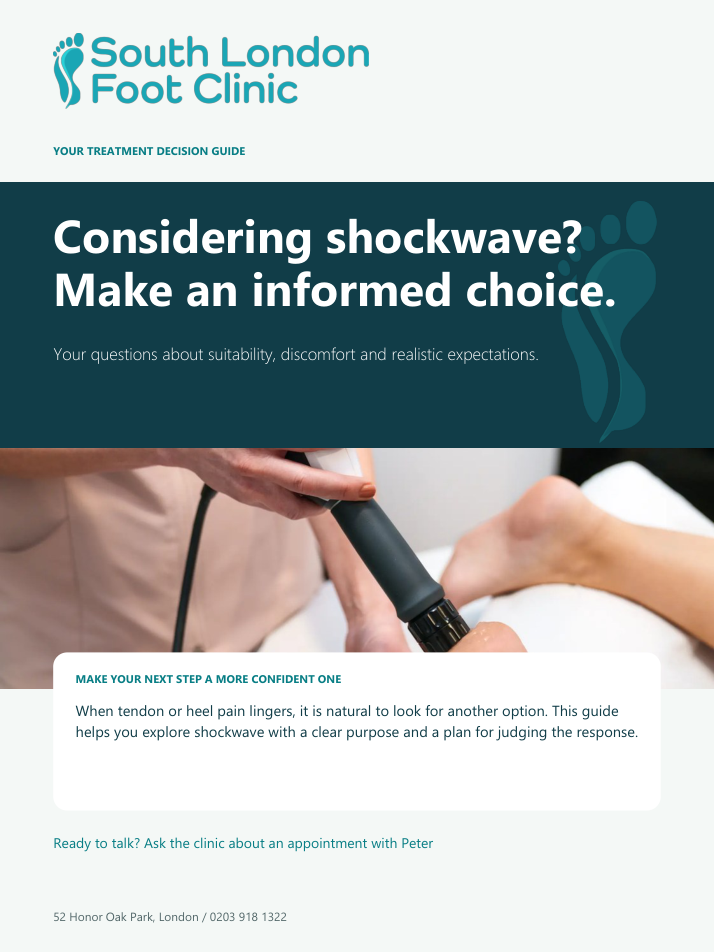
A clearer next step starts with a conversation.
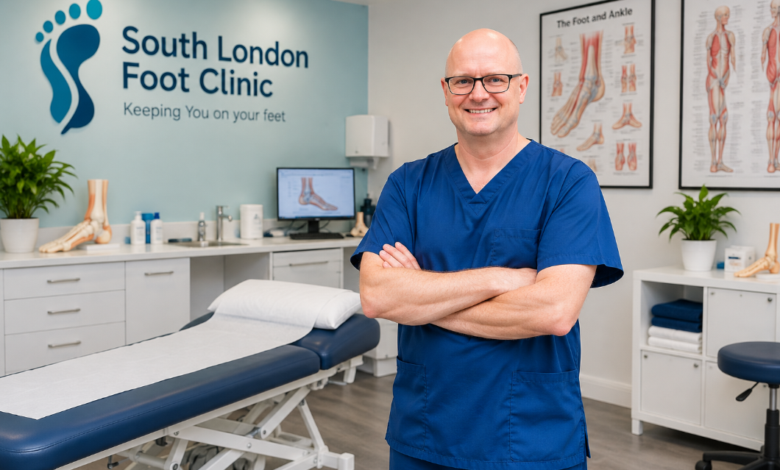
Peter Gauntlett & the South London Foot Clinic team
Patient feedback
In their own words
“Peter is an incredibly attentive and knowledgeable podiatrist. He kept me informed at every stage of my treatment and followed up thoroughly. I highly recommend South London Foot Clinic and Peter!”
“She explained how the corn formed and explained what she would do to remove it. She worked quickly causing minimal discomfort, applied an antiseptic and bandaged the area when she had finished.”
“Excellent care and professional treatment for my knee pain. The therapy was highly effective, and I noticed a significant improvement in both pain and mobility. Thank you Peter”
“Had a great experience at the South London Foot Clinic! Peter was friendly and attentive, he gave a thorough diagnosis and I'm already seeing massive improvements after experiencing foot pain. Would highly recommend!”
“The lady was absolutely fantastic kind and asked some questions to ensure I was treated correctly and the lady checked again if was fit to leave and if i was still experiencing any more pain before i left.”
“After they had explained the problem they talked me through the procedure. Everything was very clear and thorough. After the procedure my toe was carefully dressed and I was given after care instructions.”
“Overall, it was a good visit and experience. Definitely recommending this clinic and podiatrist Peter.”

Your questions, answered
Your shockwave questions
Explore how treatment works and what to discuss at your assessment.
Browse all questions ↗What is shockwave therapy?
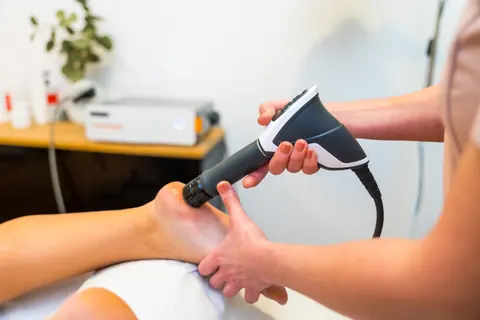
Extracorporeal Shockwave Therapy (ESWT) is a non-surgical treatment that uses mechanical acoustic waves delivered through the skin to a painful area.
It is used for certain persistent tendon and soft-tissue conditions, particularly when symptoms have not responded adequately to conventional treatments.
Shockwave therapy is thought to influence pain signalling and biological processes involved in tissue repair, although its precise mechanisms are not fully understood.
What foot and ankle conditions can shockwave therapy treat?
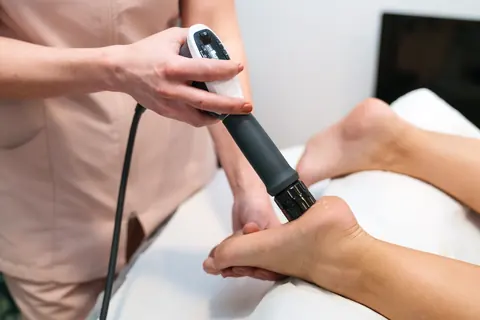
Shockwave therapy may be considered for persistent musculoskeletal conditions such as:
- Plantar fasciitis (plantar heel pain)
- Achilles tendinopathy
- Selected other chronic tendon-related conditions
It is generally considered when initial treatments, including appropriate exercises, footwear changes, rehabilitation and orthotics, have not provided sufficient relief.
Not everyone is suitable for shockwave therapy, and a clinical assessment is important before treatment.
Is shockwave therapy painful?
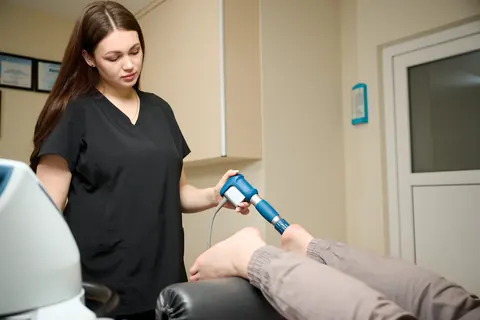
Shockwave therapy can cause some discomfort, particularly when applied over a sensitive or painful area.
Most patients can tolerate the treatment, and the intensity can often be adjusted according to comfort.
You may experience temporary soreness, redness or mild bruising afterwards. More significant complications are uncommon.
How many shockwave treatments will I need?
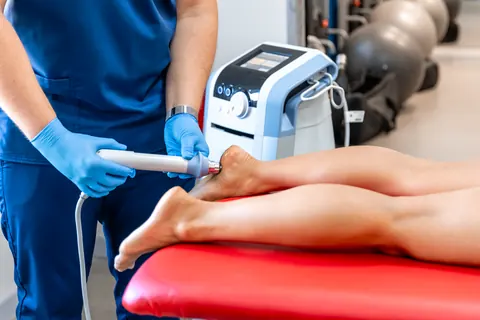
A typical course involves three sessions, commonly spaced approximately one week apart.
However, the number of sessions depends on the condition being treated, the severity of symptoms and your response.
Shockwave therapy is often combined with a rehabilitation programme to help achieve longer-term improvements.
How quickly does shockwave therapy work?
Some patients notice improvement during their treatment course, while others experience more gradual changes over several weeks.
It can take six to twelve weeks after completing treatment to assess the full benefit.
Shockwave therapy does not work for everyone. Your podiatrist will discuss the available evidence, expected benefits and alternative treatment options before recommending it.
Book an appointment
Need help choosing the right treatment?
Our team can help you choose the most suitable appointment and answer questions about treatment options and booking.


