


Does Swift Remove Verrucas Permanently for Good?
A verruca can seem minor until it hurts on every step, spreads to another area of the foot, or continues despite months of pharmacy treatments. Does Swift remove verrucas permanently? Swift can clear a verruca successfully, but no responsible clinician can promise that it will never return. The treatment is designed to help the body recognise and clear the virus causing the lesion. Long-term clearance depends on the individual immune response, the nature of the verruca and whether it has truly resolved.
Does Swift remove verrucas permanently?
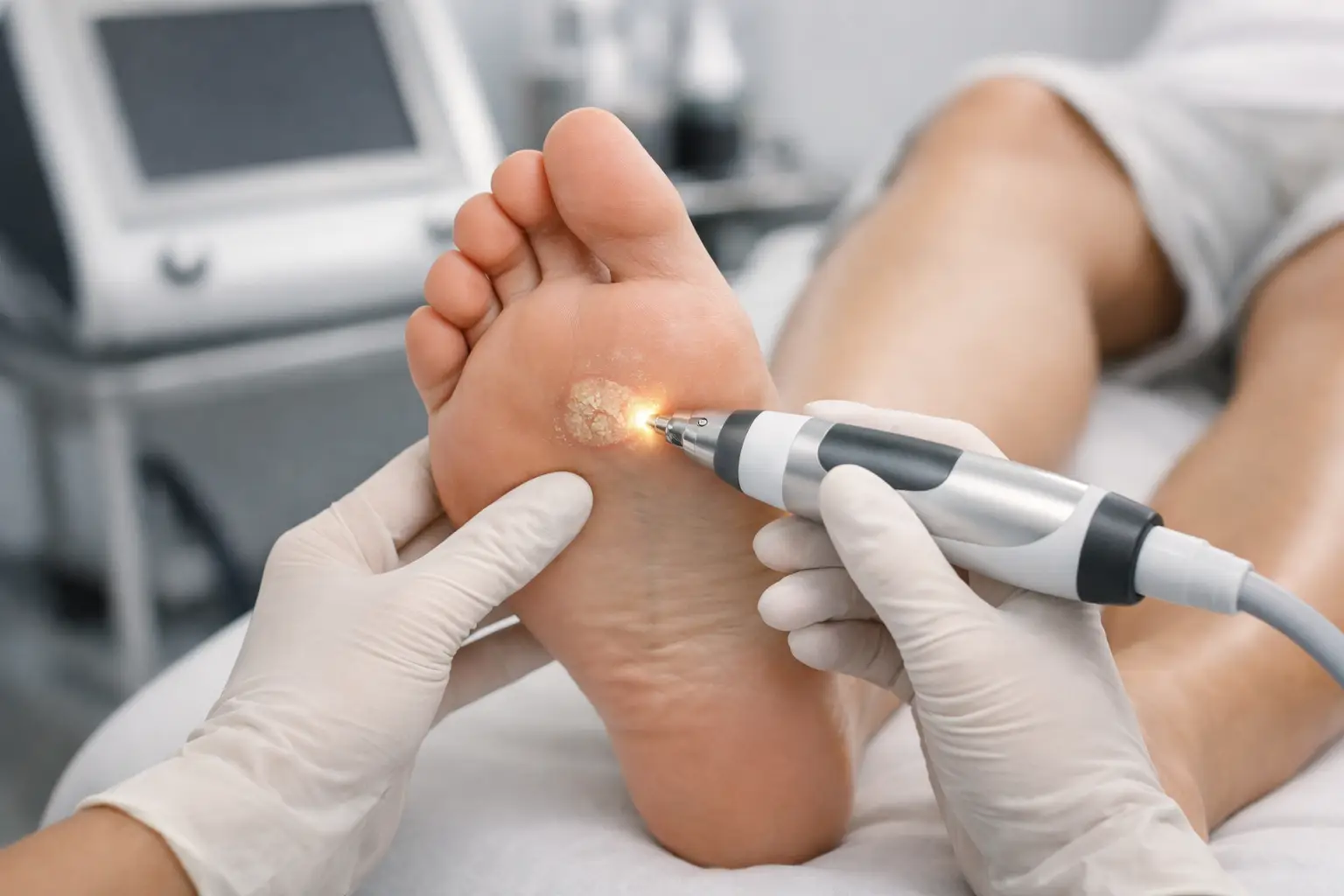
Swift is a microwave-based treatment used by podiatrists for persistent verrucas. It delivers a very brief, controlled dose of microwave energy into the affected tissue. This creates a local thermal effect and is intended to stimulate an immune response against the human papillomavirus, or HPV, responsible for most verrucas.
The key point is that Swift does not simply remove the hard skin from the surface. A verruca is a viral infection within the skin, so trimming or dissolving surface tissue alone may not address the underlying infection. Swift aims to prompt the immune system to identify the virus and clear infected cells.
When that process is successful, the treated verruca can disappear and may not recur. However, permanence cannot be guaranteed. HPV can be difficult for the immune system to detect, and some people are more prone to recurrent lesions than others. A new verruca can also develop later through further exposure to the virus, which is not necessarily a failure of the original treatment.
Why results vary from person to person
Verrucas behave differently between patients. A small, recent lesion in an otherwise healthy person may respond differently from a large, long-standing cluster that has been treated repeatedly. The location matters too. Verrucas on weight-bearing areas can become covered by thickened skin and may be more uncomfortable, although pain alone does not indicate how deeply a lesion extends or how likely it is to respond.
Your immune system has an important role. Swift is designed to support an immune response rather than replace it. Factors such as general health, medicines that affect immunity, smoking, stress and the duration of the verruca can all influence the pathway to clearance. This does not mean a patient has done anything wrong if treatment takes longer than expected. It means treatment should be planned realistically and reviewed rather than judged after one appointment.
It is also essential to confirm that the lesion is genuinely a verruca. Corns, callus, foreign-body reactions and some other skin lesions can look similar, particularly when there is significant hard skin over the area. Treating the wrong diagnosis is unlikely to produce the right result. A podiatry assessment should establish what is present before deciding whether Swift is appropriate.
What a Swift treatment course usually involves
Swift treatment is normally delivered as a course rather than a one-off procedure. The exact plan depends on the number, size and location of the verrucas, alongside your medical history and the response seen between appointments. Treatments are commonly spaced several weeks apart, allowing time for the local tissue response and immune activity to develop.
During treatment, the clinician places the Swift probe against the lesion and delivers a short application of energy. Patients often describe a sharp, brief sensation. There is no need for an injection or local anaesthetic in most cases, and there is usually no wound or dressing afterwards. You can generally walk out of the clinic and continue with normal daily activity, although the area can feel tender for a short period.
Follow-up appointments are not simply repeat treatments. They allow the podiatrist to assess changes in the lesion, reduce excess hard skin if clinically appropriate and decide whether the original plan remains suitable. Some verrucas respond progressively over time, while others need a different approach.
Clearance is not the same as surface improvement
A verruca may look flatter after treatment because surrounding hard skin has reduced, but this does not always mean the virus has cleared. Conversely, a lesion may take time to look fully normal even after the immune response has begun. Clinical review focuses on more than appearance.
A podiatrist may consider whether normal skin lines are returning across the area, whether the characteristic pinpoint blood vessels are still visible and whether pressure discomfort has changed. These observations help distinguish ongoing verruca activity from residual thickened skin or healing tissue.
This is why self-checking can be misleading. Picking at a lesion, cutting it yourself or using strong acids without guidance can cause irritation, bleeding and further hard skin. It may also make future assessment more difficult. If a verruca is painful, changing or persistent, structured clinical review is safer and more informative.
When Swift may be a suitable option
Swift is often considered when a verruca has persisted despite over-the-counter treatments, has become painful during walking or sport, or is causing repeated frustration. It can be particularly useful for people who want a treatment with no daily acid application, no need to keep a dressing in place and minimal interruption to work or activity.
That said, it is not automatically the right treatment for every patient or every lesion. Treatment choice should take account of the diagnosis, skin condition, circulation, sensation, medical history and your ability to attend for follow-up. People with diabetes, reduced circulation, neuropathy, impaired healing or immune suppression need an individual assessment before any verruca treatment is selected.
For some patients, a simple treatment plan with professional reduction of hard skin and carefully supervised topical therapy may be appropriate. For others, verruca needling or another procedural option may be discussed. The aim is not to promote one treatment in every case. It is to select a proportionate option based on a clear diagnosis and realistic expectations.
How to reduce the chance of verrucas returning
Even after a verruca has cleared, there is no complete protection against future HPV exposure. The virus can be acquired through contact with contaminated surfaces or skin, particularly where feet are bare and the skin is softened by moisture. Communal changing areas, swimming pool surrounds and shared showers are common environments for transmission.
Practical foot hygiene can reduce risk. Keep feet dry where possible, avoid sharing footwear or towels, wear suitable pool footwear in communal wet areas and cover active verrucas where advised. Avoid shaving or picking at the lesion, as this can spread viral material to nearby skin. If you notice a new area of discomfort or a small lesion, early assessment can help establish whether it needs treatment.
It is equally useful to remember that recurrence is not always preventable. A lesion returning in the same area may indicate incomplete clearance, while a lesion elsewhere may be a new infection. Both situations warrant review, but they do not mean Swift has caused the problem.
A clear plan matters more than a promise
The most useful question is not only whether Swift can remove a verruca permanently, but whether it is the right option for your particular lesion and circumstances. At South London Foot Clinic, assessment is used to confirm the diagnosis, explain the available treatment pathways and set out what follow-up is likely to involve.
A successful outcome is usually measured by healthy, comfortable skin and a return to normal activity, not by an unrealistic guarantee. If a verruca is persistent or painful, a podiatry assessment can provide the clarity needed to choose the next step with confidence.


