


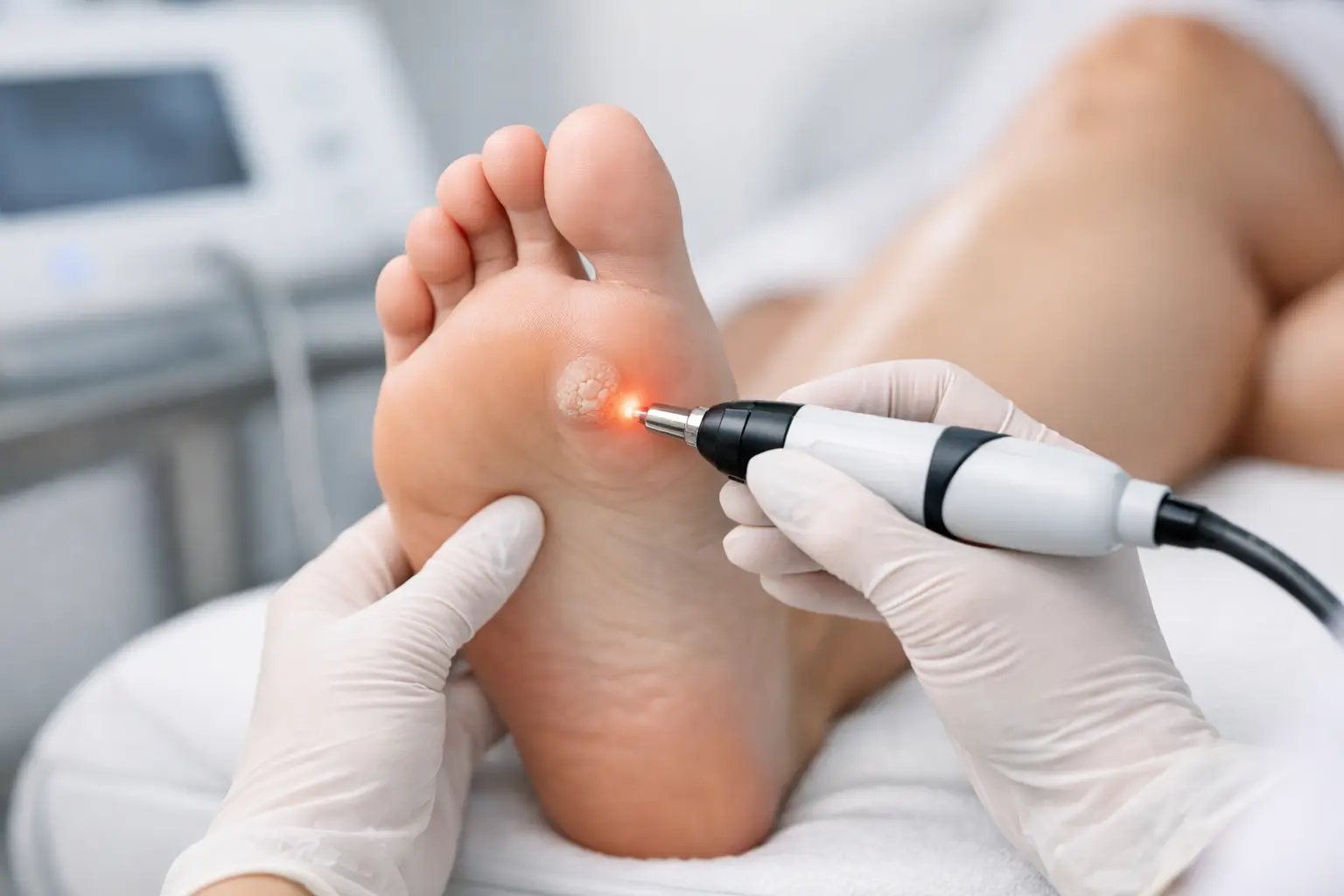
Swift Verruca Treatment Explained
A verruca that has lingered for months can be more than a nuisance. It can make walking uncomfortable, affect sport, and leave you trying one over-the-counter product after another with very little change. Swift verruca treatment is designed for exactly this sort of problem – a persistent lesion that needs a more structured clinical approach.
Unlike acids or freezing, Swift uses microwave energy delivered directly into the verruca. The aim is not simply to destroy surface tissue. It is to stimulate a local immune response so the body can recognise and clear the virus more effectively. That difference matters, particularly when a verruca is painful, long-standing or repeatedly returning.
What is Swift verruca treatment?
Swift verruca treatment is a clinic-based procedure that delivers a short burst of microwave energy into the affected tissue. Verrucae are caused by human papillomavirus, and one reason they can be difficult to shift is that the virus often sits within the skin without provoking a strong enough immune response. Swift works by heating the tissue in a very controlled way, which can help trigger that response.
From a patient perspective, the treatment itself is brief. A specialised probe is applied to the verruca and energy is delivered in a series of short applications. There is no dressing required afterwards in most cases, and patients are usually able to return to normal activity the same day.
This does not mean it is the right choice for every verruca. Some lesions respond to simpler care. Others may need a different procedural option depending on their size, location, duration and the patient’s medical history. That is why assessment comes first.
Why some verrucae are harder to treat
Not every verruca behaves in the same way. Some resolve spontaneously, particularly in children. Others persist for years. Adults often present with lesions that are deeper, more established and more resistant to pharmacy treatments.
Location also makes a difference. A verruca on a weight-bearing part of the foot may be pushed inwards by pressure, making it more painful and sometimes harder to manage. Mosaic verrucae, which appear as clusters, can also be more stubborn. Previous treatment history matters too. If a lesion has been repeatedly treated with acids, scraping or freezing without proper resolution, the skin can become irritated while the virus remains active.
For that reason, a good assessment is not just about confirming that a lesion is a verruca. It is about checking whether the diagnosis is correct, understanding how long it has been present, reviewing what has already been tried, and deciding whether Swift is likely to be a sensible next step.
How Swift verruca treatment compares with other options
Patients often ask whether Swift is better than freezing or acid. The more accurate answer is that it works differently.
Acid treatments aim to break down infected skin over time. They can be useful, but they rely heavily on consistent home application and can take many weeks. Cryotherapy freezes the tissue, but results can be variable, especially for long-standing plantar verrucae. Verruca needling is another clinical option, usually considered for more persistent cases, and works through a different mechanism again.
Swift is often considered when patients want treatment that is structured, clinic-led and does not depend on daily home management. It also appeals to people who want to avoid the prolonged skin breakdown associated with some topical treatments. That said, no treatment offers a guaranteed one-session cure. Response varies, and several appointments may be needed.
What happens at the appointment?
A proper appointment should begin with diagnosis, not with treatment handed out by default. The clinician will examine the lesion, discuss symptoms, take a medical history and explain whether the appearance is consistent with a verruca. In some cases, what appears to be a verruca may instead be a corn, callus or another skin lesion requiring a different plan.
If Swift is appropriate, the procedure is usually carried out in clinic. The area may be lightly reduced if there is overlying hard skin, although aggressive debridement is not the goal. The microwave probe is then applied to the verruca for a series of very short bursts.
The treatment is quick, but patients should be prepared for discomfort during application. People describe it differently – often as a sharp heat or intense sting that settles quickly once each burst stops. This is one of the main trade-offs with Swift. The sessions are short and recovery is generally straightforward, but the treatment itself can be uncomfortable.
Does Swift verruca treatment hurt afterwards?
Most patients can walk out of the clinic and carry on with the day. There is not usually an open wound, and dressings are not typically needed. Some soreness can occur for a short period afterwards, especially on weight-bearing areas, but this is usually manageable.
Compared with treatments that leave the skin blistered, broken down or requiring repeated home care, many patients find the recovery side of Swift easier to manage. Still, comfort depends on the verruca’s location, the individual pain threshold and how reactive the tissue is. A lesion under the heel of a runner may feel different afterwards from a smaller lesion on a less pressured area.
How many sessions are needed?
This is one of the most important parts of expectation setting. Some verrucae improve quickly. Others take longer, and some need multiple sessions before there is clear change. It is common for a treatment plan to involve a course rather than a single appointment.
The number of sessions depends on factors such as how long the verruca has been present, whether it is solitary or part of a mosaic pattern, and whether the patient has had previous unsuccessful treatment. Immune response also varies from person to person. That is why clinicians should be careful not to overpromise.
The useful question is not whether Swift works instantly, but whether it is an appropriate evidence-informed option for a persistent verruca that has not settled with simpler treatment. In many adult patients, that answer is yes.
Who may be suitable for Swift verruca treatment?
Swift may suit adults with painful or persistent verrucae, especially when over-the-counter treatment has failed or when the lesion is interfering with walking, work or sport. It can also suit patients who want a clinic-based treatment pathway with minimal home management.
Suitability still depends on clinical assessment. Some patients may be better managed with another option based on medical history, lesion type or tolerance of procedural discomfort. If there are diagnostic uncertainties, those need to be addressed first. A methodical podiatry assessment helps avoid treating the wrong problem.
At South London Foot Clinic, the emphasis is on explaining the diagnosis clearly and recommending treatment only when it fits the clinical picture. That matters with verrucae, because persistent lesions are frustrating enough without adding guesswork.
When Swift may not be the best first choice
There are situations where Swift may not be the first recommendation. A very new verruca that is not painful may simply be monitored or treated more conservatively. A patient who is highly pain-sensitive may prefer a different pathway. In some cases, verruca needling or another approach may offer a better fit depending on the lesion and treatment goals.
There is also the practical side. Swift is a private clinical treatment, so cost is part of the decision. For some patients, that is worthwhile because they want a more direct route after months of failed self-treatment. For others, a slower or less intensive option may be reasonable. Good care means discussing those trade-offs openly.
Why diagnosis-led care matters
With foot lesions, the biggest mistake is assuming every rough patch of skin is a verruca. Corns, pressure lesions and other dermatological changes can look similar, especially when they are painful on the sole of the foot. Treating the wrong diagnosis wastes time and can make symptoms worse.
That is why a consultation-led approach is valuable. Rather than moving straight to a named procedure, the clinician establishes what the lesion is, why it is painful, what treatment has already failed and what realistic progress should look like. If Swift is recommended, it should be because it fits the diagnosis and the patient’s goals, not because it is simply available.
For patients, that usually translates into more confidence. You understand what is being treated, why this option has been chosen, and what the likely next steps are if more than one session is needed.
A realistic view of results
Swift has become a well-regarded option for persistent verrucae because it is targeted, efficient and grounded in a different treatment mechanism from older methods. That does not make it magic. Verrucae are caused by a virus, and viral lesions can be unpredictable.
The best results tend to come when treatment is chosen for the right lesion, expectations are set properly, and follow-up is part of the plan. If your verruca has become a recurring problem rather than a minor annoyance, it is worth having it assessed properly and discussing whether Swift is a sensible next step rather than continuing to treat it by trial and error.
A clear diagnosis and a treatment plan you understand usually brings more relief than another bottle of acid ever will.


