


When Should Verruca Be Treated? A Clear Guide
A verruca can be painless and barely noticeable, or it can make every step feel as though you are walking on a small stone. Knowing when should verruca be treated is less about how long it has been there and more about its symptoms, location, rate of change and your wider health. Some verrucae settle without intervention. Others need a structured treatment plan to reduce pain, limit spread and help you return to normal activity.
A podiatry assessment provides clarity where over-the-counter treatments have failed, the diagnosis is uncertain or the verruca is affecting daily life. The aim is not simply to remove visible hard skin, but to confirm what is causing the problem and select an appropriate treatment pathway.
What is a verruca?
A verruca is a wart on the sole of the foot, caused by strains of the human papillomavirus (HPV). The virus enters through tiny breaks in the skin and can be picked up in communal changing areas, swimming pools or other damp environments. It is common, and it does not reflect poor hygiene.
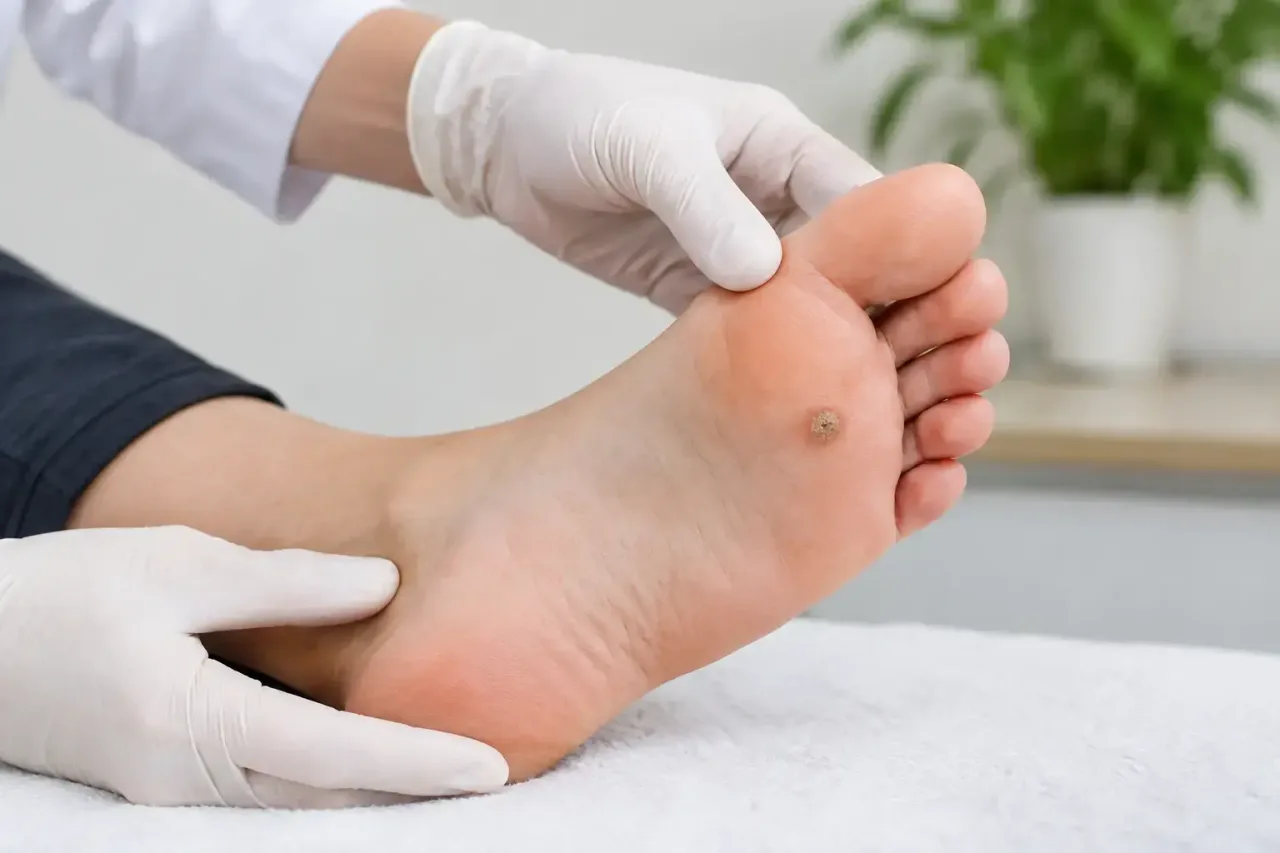
Pressure from standing and walking can push a verruca inwards. This often creates a circular area of hard skin, sometimes with small dark dots caused by tiny blood vessels. It may be painful when squeezed from the sides or when direct pressure is applied while walking.
Not every rough or painful area on the sole is a verruca. Corns, callus, foreign bodies and some skin conditions can look similar. This is one reason a persistent lesion should be assessed rather than repeatedly treated on the assumption that it is a verruca.
When should a verruca be treated?
Treatment is usually worth considering when a verruca is causing pain, limiting activity, spreading, persisting despite self-care or creating concern because its appearance has changed. There is no single timescale that applies to everyone. A small, painless verruca that is not changing may be monitored, whereas a painful lesion beneath a weight-bearing part of the foot may need treatment much sooner.
When it is painful or affecting walking
Pain is the most practical reason to seek help. Verrucae beneath the heel, ball of the foot or toes can become increasingly uncomfortable because they are repeatedly compressed with every step. Runners, gym users, people who stand for work and anyone whose footwear places pressure on the area may find that even a small verruca becomes disruptive.
If you are changing the way you walk to avoid pain, treatment should not be delayed. Altered walking patterns can place unnecessary strain on other areas of the foot, ankle, knee or hip.
When it is spreading or multiplying
A single verruca may remain stable, but it can also spread to nearby skin or appear elsewhere on the foot. Clusters of small verrucae are sometimes called mosaic verrucae. As the affected area becomes larger, treatment can take longer and can be more difficult to manage with pharmacy products alone.
Avoid picking, cutting or filing aggressively at the lesion, as this can irritate the skin and potentially spread viral material. Covering the verruca in communal wet areas and not sharing towels, socks or footwear are sensible precautions.
When self-treatment has not worked
Salicylic acid preparations can be effective for some people when used carefully and consistently over several weeks. However, they do not work in every case. Treatment may fail because the diagnosis is incorrect, the product is not suitable for the site, surrounding hard skin is preventing penetration, or the verruca is simply resistant to that approach.
If you have followed the product instructions consistently and there is no meaningful improvement after a reasonable period, an assessment is more useful than continuing indefinitely. A podiatrist can confirm the diagnosis, reduce excess hard skin where appropriate and discuss treatment options based on the lesion and your health history.
When its appearance changes or the diagnosis is unclear
A lesion that bleeds without clear cause, ulcerates, changes rapidly in shape or colour, or does not behave like a typical verruca should be examined. This does not mean that it is necessarily serious, but it does mean it should not be treated blindly at home.
Professional assessment is particularly valuable when there is uncertainty. A clear diagnosis prevents unnecessary treatment and ensures that a different skin or foot problem is managed correctly.
When monitoring may be reasonable
For an otherwise healthy adult, a small verruca that is painless, not spreading and not interfering with walking can sometimes be observed. The body’s immune system may clear it over time, although this can take months or longer. Monitoring is not the same as ignoring it. Check for changes in discomfort, size, number or appearance, and take steps to reduce transmission.
The trade-off is straightforward: waiting avoids treatment, but there is a possibility that the verruca persists, becomes painful or spreads. For patients with an upcoming sporting event, a physically demanding job or a long period of walking planned, earlier treatment may be preferable even if the lesion is currently mild.
When not to treat a verruca yourself
Do not use acids, blades or freezing products without professional advice if you have diabetes, poor circulation, peripheral neuropathy, reduced sensation in your feet, a weakened immune system or a history of foot ulceration. These conditions can increase the risk of skin damage, infection and delayed healing.
You should also seek assessment before self-treating if you are unsure whether the lesion is a verruca, if the area is very painful, or if the surrounding skin is broken or inflamed. Children and pregnant patients may also benefit from individual advice before starting treatment, particularly where stronger preparations or procedures are being considered.
How a podiatrist plans verruca treatment
Effective care begins with examination. A podiatrist will assess the lesion’s location, size, depth, number and pattern, alongside your symptoms, activity levels, medical history and previous treatments. This helps establish whether treatment is necessary and which option is proportionate.
Conservative management may include carefully reducing overlying hard skin and advising on suitable topical treatment. This can make home treatment more effective and more comfortable. It also allows the response to be monitored properly over time.
For persistent verrucae, more advanced options may be considered. Swift treatment uses precisely delivered microwave energy to stimulate an immune response within the affected tissue. Verruca needling is another procedural option that may be suitable in selected cases, particularly where other treatments have not been successful. Neither option is right for every patient, and outcomes can vary according to the type, duration and location of the verruca, as well as the individual immune response.
At South London Foot Clinic, treatment is consultation-led. The first priority is to confirm the problem, explain the available options and set realistic expectations around discomfort, recovery and the number of appointments that may be required. A verruca is not always a quick fix, but a structured plan gives you a clearer route forward.
What to expect after treatment
Depending on the treatment used, it is normal to experience temporary tenderness, localised inflammation or changes to the hard skin over the verruca. Your podiatrist will explain what is expected, how to protect the area and when to return for review. Continuing with normal activity may be possible, but this depends on the procedure, the site of the verruca and the demands placed on your feet.
It is also possible for a verruca to recur or for additional lesions to become visible during treatment. This is frustrating, but it does not necessarily mean the treatment has failed. Follow-up allows the response to be assessed and the plan adjusted where needed.
The practical next step
A verruca deserves assessment when it hurts, spreads, persists or leaves you unsure what you are dealing with. Early advice is especially sensible if your work, exercise or general mobility is being affected, or if you have a health condition that makes self-treatment unsafe. A clear diagnosis and realistic treatment plan can remove the uncertainty and help you make a decision that is right for your feet.


