


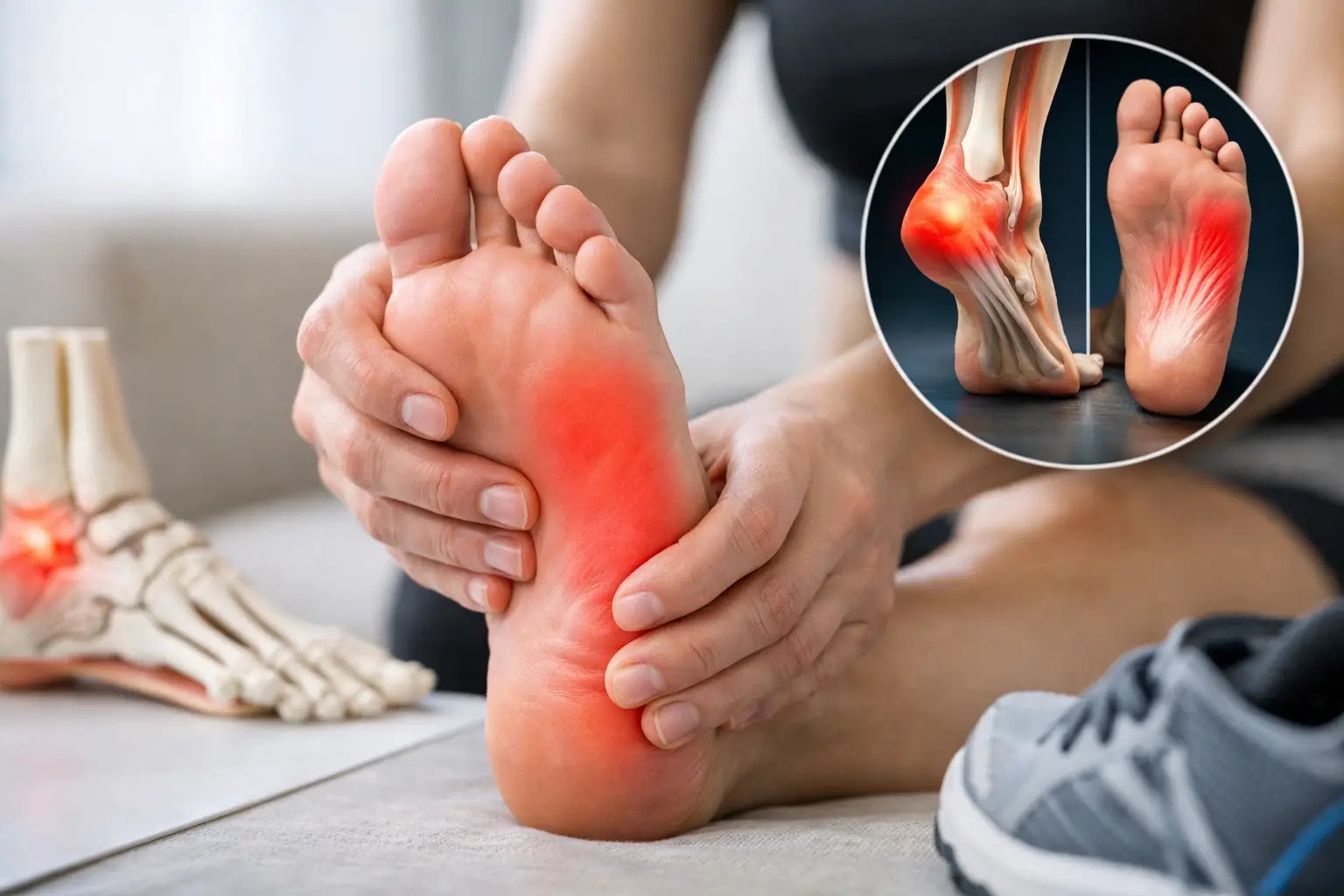
Top Causes of Heel Pain Explained
A sharp pain under the heel when you take your first steps in the morning is easy to dismiss at first. Many people assume it will settle on its own, only to find that weeks later it is still there, affecting walking, exercise and even standing at work. The top causes of heel pain are not all the same, and getting the diagnosis right matters because each condition behaves differently and responds best to a specific treatment plan.
Heel pain is a symptom, not a diagnosis. The exact location of the pain, what brings it on, how long it has been present and whether there is stiffness, swelling or nerve-type irritation all help narrow down the cause. In clinic, one of the main aims is to work out which structure is actually involved rather than treating every heel problem as plantar fasciitis.
Top causes of heel pain under the foot
Pain beneath the heel is the pattern most people recognise, but even here there are several possibilities.
Plantar fasciopathy
This is one of the most common causes of heel pain. The plantar fascia is a strong band of tissue that supports the arch and attaches near the heel bone. When it becomes overloaded, the tissue can become painful and less tolerant of normal strain.
Patients often describe pain on the first few steps in the morning or after sitting down for a while. It may ease as they move around, then return after longer periods on their feet. Runners, people who have recently increased activity, and those spending long hours standing can all develop it. Foot mechanics, calf tightness, changes in body weight and unsuitable footwear can all contribute.
Although many people still call this plantar fasciitis, the term plantar fasciopathy is often more accurate in longer-standing cases because the tissue is not always acutely inflamed. That distinction matters, as treatment is usually built around reducing overload, improving tissue capacity and addressing the factors that caused it in the first place.
Heel fat pad syndrome
The heel has a natural cushion beneath it. When that fat pad becomes irritated, thinned or less able to absorb impact, pain can develop directly under the centre of the heel. This is often more of a deep bruise-like pain than the sharper inner-heel pain seen with plantar fascia problems.
It can be aggravated by walking on hard surfaces, prolonged standing or high-impact activity. Some people notice it more when barefoot, particularly on kitchen or bathroom tiles. Older adults may be more prone to it because the quality of the cushioning tissue can change with age, but it can also occur after repeated impact or a poorly managed change in activity.
Plantar fascia tear
A tear in the plantar fascia is less common than plantar fasciopathy but is important to identify. It may happen after a sudden push-off movement, a jump, or in tissue that has been under strain for some time. Patients sometimes report a sudden sharp pain, occasionally with a popping sensation, followed by difficulty weight-bearing.
The treatment pathway here is different from that of routine plantar heel pain. If a tear is missed and treated as a simple overuse problem, recovery may be delayed. This is one reason a structured clinical examination is so valuable.
Top causes of heel pain at the back of the heel
If the pain is behind the heel rather than underneath it, attention turns to the Achilles tendon and nearby structures.
Achilles tendinopathy
Achilles tendinopathy commonly causes pain at the back of the heel or slightly higher up the tendon. It can affect runners, walkers and people who have recently changed training volume, pace, hills or footwear. It is also common in people returning to activity after a break.
The pain is often worse at the start of exercise, may warm up as activity continues, and then feel more irritable later the same day or the following morning. Some patients notice stiffness more than pain at first. Others develop swelling or a thickened area in the tendon.
There are two main patterns: insertional Achilles tendinopathy, where the tendon attaches to the heel bone, and mid-portion Achilles tendinopathy, which occurs slightly higher up. That distinction affects treatment because exercises and load management are not exactly the same for both.
Retrocalcaneal bursitis
A bursa is a small fluid-filled sac that reduces friction between tissues. At the back of the heel, the retrocalcaneal bursa sits between the Achilles tendon and the heel bone. When it becomes irritated, it can cause pain, swelling and pressure sensitivity in that area.
This problem is often aggravated by certain shoes, especially those with a rigid heel counter that presses into the back of the heel. It can occur alongside Achilles problems or with a prominent bony shape at the heel. Patients may struggle with shoes that used to feel perfectly comfortable.
Haglund’s deformity
Haglund’s deformity refers to a bony prominence at the back of the heel. Not everyone with this shape has symptoms, but when it rubs against footwear or contributes to irritation around the Achilles insertion and bursa, it can become painful.
This is a good example of why imaging can be helpful when clinically indicated. The question is not simply whether a bony prominence exists, but whether it is actually contributing to the patient’s symptoms and how much surrounding tissue irritation is present.
Less obvious causes of heel pain
Some heel symptoms do not fit the more familiar patterns. These cases often benefit most from a more detailed assessment because the source can be missed if assumptions are made too early.
Nerve irritation and Baxter’s nerve entrapment
Not all heel pain is mechanical strain in soft tissue. Nerve irritation can cause burning, tingling, shooting pain or altered sensation around the heel. One recognised source is entrapment of the inferior calcaneal nerve, often called Baxter’s nerve.
This can mimic plantar heel pain, but patients may describe symptoms that feel more electrical, spreading or persistent at rest. If nerve involvement is present, a standard stretching-only approach is unlikely to deal with the real problem.
Stress fracture of the calcaneus
A stress fracture of the heel bone can develop when the bone is repeatedly overloaded faster than it can adapt. This may happen after a sharp increase in running, long-distance walking, high-volume sport or physically demanding work.
Pain often becomes progressively worse and may not follow the classic first-step pattern of plantar fasciopathy. Squeezing the sides of the heel can be painful in some cases, although symptoms vary. This is not something to push through. Missing a stress injury can prolong recovery significantly.
Inflammatory arthritis and systemic causes
Heel pain is sometimes linked to an inflammatory condition rather than a local overuse problem. Conditions such as spondyloarthritis can affect tendon and fascia attachment points, including around the heel. When heel pain is present on both sides, associated with marked morning stiffness, or accompanied by symptoms elsewhere in the body, broader medical causes need to be considered.
This is where a careful history becomes just as important as the physical examination. The heel may be where pain is felt, but not where the whole problem starts.
Why the diagnosis matters
Many heel conditions overlap. A patient may have plantar fasciopathy and nerve irritation, or insertional Achilles pain with bursitis and shoe-related compression. That is why heel pain should not be treated as a single condition with a single solution.
Stretching can help some people and aggravate others. Rest may settle an acute flare but does little to rebuild tissue capacity if poor loading patterns remain. Insoles can be useful when matched to the problem, but they are not automatically the answer for every heel complaint.
A good assessment looks at the exact pain location, tissue loading, ankle movement, calf function, gait and footwear. Where clinically appropriate, diagnostic ultrasound can add clarity by showing whether the plantar fascia is thickened, whether the Achilles insertion is involved, whether a bursa is irritated or whether a tear is suspected. At South London Foot Clinic, this forms part of a structured consult, scan, discuss, treat approach, so treatment decisions are based on findings rather than guesswork.
When to seek assessment for heel pain
If heel pain has lasted more than a couple of weeks, is worsening, keeps returning, or is affecting your normal walking or exercise, it is worth having it assessed properly. The same applies if the pain began suddenly, followed an injury, or is associated with swelling, numbness or marked tenderness.
Early assessment does not mean every case needs imaging or advanced treatment. It means identifying what is driving the pain and choosing a realistic plan. That may involve load modification, rehabilitation, footwear changes, orthotic support or, in selected cases, more targeted interventions. The right starting point depends on the diagnosis.
Heel pain often looks simple from the outside, but the details matter. When the cause is properly identified, treatment becomes clearer, recovery is usually more efficient, and patients can move forward with more confidence rather than trying one generic fix after another.


