


Swift Versus Verruca Needling – Which Is Best?
A verruca can be small yet disproportionately disruptive. It may hurt with every step, alter how you walk, stop you enjoying sport or simply become frustrating after months of unsuccessful home treatment. When comparing swift versus verruca needling, the right choice is not simply the treatment that sounds quickest. It is the one that suits the diagnosis, the location and size of the lesion, your medical history and the level of recovery time you can realistically manage.
Both treatments aim to prompt the immune system to recognise and clear the human papillomavirus (HPV) responsible for a verruca. They do this in different ways. Swift uses controlled microwave energy, while verruca needling creates a targeted puncture injury under local anaesthetic. Neither treatment can guarantee clearance, and neither is automatically the better choice for every patient.
Swift versus verruca needling: the clinical difference
A verruca is not simply a hard patch of skin. It is a viral infection within the outer layers of the skin, most commonly on the sole of the foot. Pressure through walking can push it inwards, often creating tenderness and a surrounding rim of hard skin. Some verrucae occur as a single defined lesion; others form clusters, sometimes called mosaic verrucae, which can be more persistent.
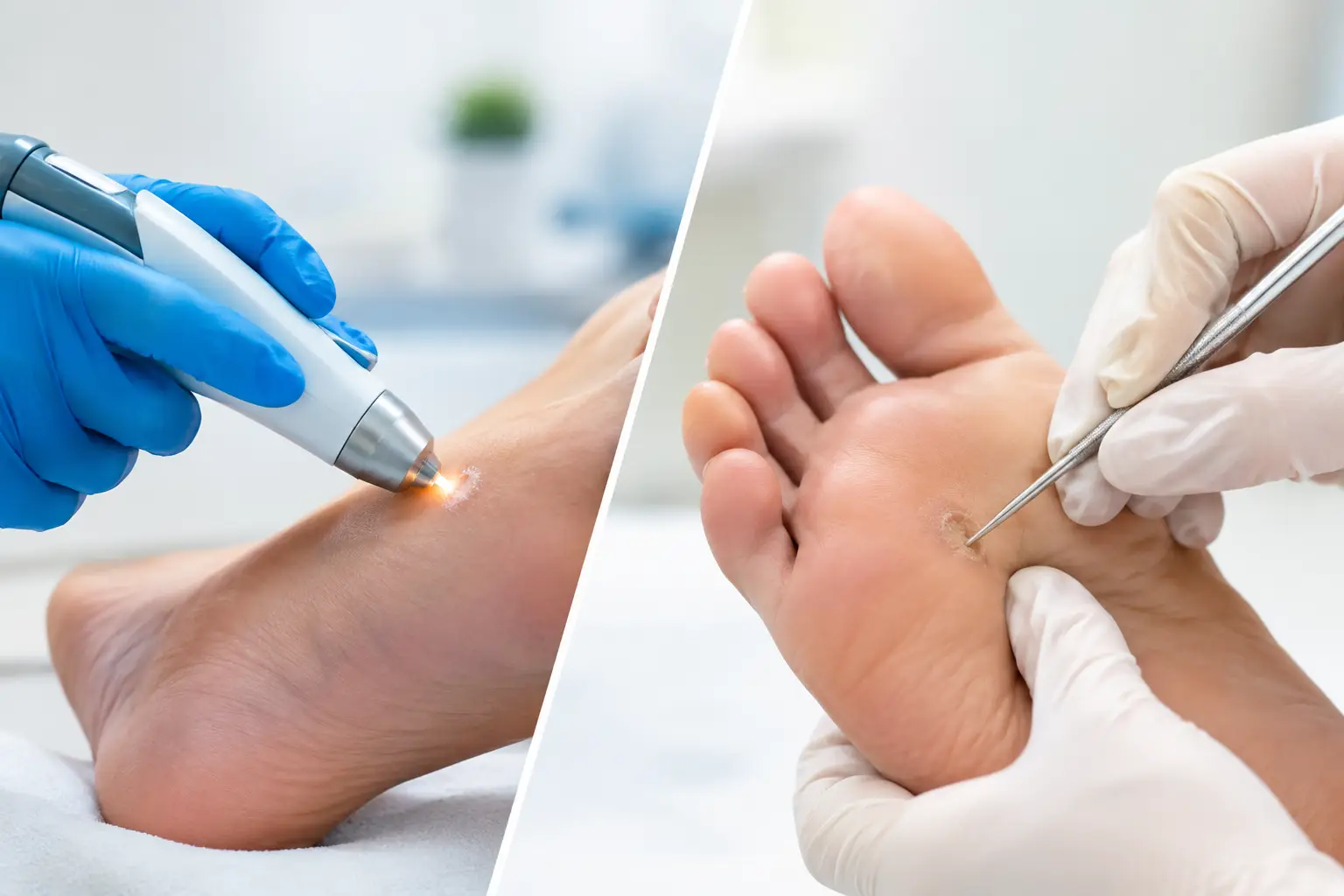
Swift treatment applies microwave energy through a small handheld probe placed against the verruca. The energy produces a brief, localised rise in temperature within the affected tissue. This is intended to create a controlled immune response, helping the body identify the virus and address it over time. The application itself is very short, although it can be sharp or uncomfortable.
Verruca needling is a minor procedure performed with local anaesthetic. Once the area is numb, a fine needle is used to puncture the verruca repeatedly, carrying viral material deeper into the skin. The aim is to expose the immune system to the virus in a way that encourages a more effective response. A dressing is applied afterwards and the treated area is allowed to heal.
The treatments share the same broad goal, but their practical experience is quite different. Swift is generally a short appointment with no wound to manage. Needling is more invasive and usually involves a more considered period of aftercare, but it may be suitable when a one-off procedural approach is preferred.
How Swift treatment may suit your routine
Swift is often considered by people who want minimal interruption to work, walking or training. There is no incision and, in most cases, patients can leave the clinic wearing their usual footwear. The treated area may feel tender afterwards, particularly when the verruca lies beneath a pressure point, but many people continue with normal day-to-day activity.
Treatment is commonly delivered as a course rather than a single visit. The number and spacing of appointments vary according to the lesion and clinical response. This means Swift can be convenient in terms of immediate downtime, but it does require commitment to follow-up appointments and patience while the immune response develops.
The sensation during application is often the main concern. It is brief, but some patients find it intense. Pain tolerance, lesion location and the thickness of surrounding hard skin can all influence the experience. A clinician can discuss what to expect before treatment and adjust the plan where appropriate.
Swift may be particularly practical for a defined verruca in someone who cannot accommodate a post-procedure wound, or for someone who would rather avoid local anaesthetic. It is not, however, a shortcut around assessment. A lesion that is painful, unusually shaped, bleeding or changing in appearance should be examined carefully before any destructive treatment is considered.
When verruca needling may be the better option
Needling is often considered for stubborn verrucae, including lesions that have not responded to topical treatments or previous freezing. It can also be useful where the clinical aim is to create a stronger local immune stimulus through one planned procedure.
Because the area is anaesthetised, patients should not feel the puncturing itself. The injection of local anaesthetic can sting briefly, and tenderness may develop as the numbness wears off. The foot is then likely to need protecting for a short period. Depending on the site and extent of treatment, this may mean reducing high-impact exercise, keeping the dressing dry as instructed and choosing comfortable footwear while healing takes place.
Needling does not necessarily mean a long time away from normal life, but it asks more of the patient in the first few days than Swift usually does. For a runner, a job involving prolonged standing or a person with a busy caring role, that practical difference matters. Planning treatment around an appropriate recovery window can make the process more manageable.
A single needling procedure may be enough for some verrucae, but clearance is still not guaranteed. The immune system responds differently from person to person, and complex or longstanding lesions can require further management. It is better to regard needling as a structured clinical treatment, not a one-visit promise.
Which treatment is more effective?
There is no honest universal answer. Verrucae can resolve without treatment, persist despite several treatments or respond well after a targeted intervention. Published research into verruca care is complicated by differences in lesion type, treatment protocols and the way outcomes are measured. A treatment that works well for one patient may not be the most appropriate option for another.
The most useful question is not, “Which is strongest?” It is, “Which treatment makes clinical and practical sense for my verruca?” The answer may depend on whether the lesion is solitary or mosaic, how long it has been present, whether it causes pain, what has already been tried and whether you have factors that affect healing or sensation in your feet.
For example, a person with a small but painful verruca under the ball of the foot may prioritise minimal downtime. Someone with a stubborn cluster that has repeatedly returned may be more willing to accept a minor procedure and a protected recovery period. Cost should also be considered in the context of the likely treatment pathway: Swift is usually provided as a series of sessions, whereas needling is commonly planned as a procedure with review.
Why diagnosis comes before treatment
Not every painful area of hard skin is a verruca. Corns, callus, foreign-body reactions and other skin lesions can sometimes look similar, particularly once they have been treated repeatedly at home. Treating the wrong problem with a powerful procedure is unhelpful and may delay appropriate care.
A podiatry assessment should establish whether the lesion is consistent with a verruca and identify factors that may affect treatment choice. This includes its size, depth, number, location and the amount of pressure passing through the area. Your clinician should also ask about circulation, diabetes, immune health, medications, allergies and any previous treatment response.
At South London Foot Clinic, treatment planning begins with examination and a clear discussion of the findings. Ultrasound is valuable for many foot and lower-limb conditions, but it is not routinely required to diagnose a straightforward verruca. Using the right assessment for the problem is part of safe, efficient care.
Recovery and aftercare: what changes between treatments?
After Swift, the skin may be sore, red or temporarily more sensitive. You may notice changes in the appearance of the verruca over the following weeks as the skin renews and the immune response progresses. It is usually sensible to avoid picking at the area or aggressively removing skin unless specifically advised.
After needling, there is a deliberate puncture wound to protect. You will receive guidance on dressing care, keeping the area clean and when to return to normal activity. Tenderness is expected, and avoiding impact exercise initially may reduce discomfort and protect the healing skin. Contact the clinic promptly if you develop increasing redness, swelling, discharge, persistent bleeding or pain that is worsening rather than settling.
For both treatments, follow-up matters. A verruca may look different before it has fully resolved, and residual hard skin can make self-assessment unreliable. Review appointments allow progress to be checked and the next step to be chosen based on what the skin is actually doing.
Choosing with confidence
If a verruca is painful, persistent or affecting the way you move, it is reasonable to seek a clear treatment plan rather than continuing to cycle through home remedies. Swift may offer a lower-downtime route through a course of treatments; needling may offer a more invasive but focused procedural option. The best decision follows an examination, an honest discussion about recovery and a plan that fits your feet as well as your life.
A good appointment should leave you knowing what the lesion is, why a particular treatment has been recommended and what progress should realistically look like over the weeks ahead.


