


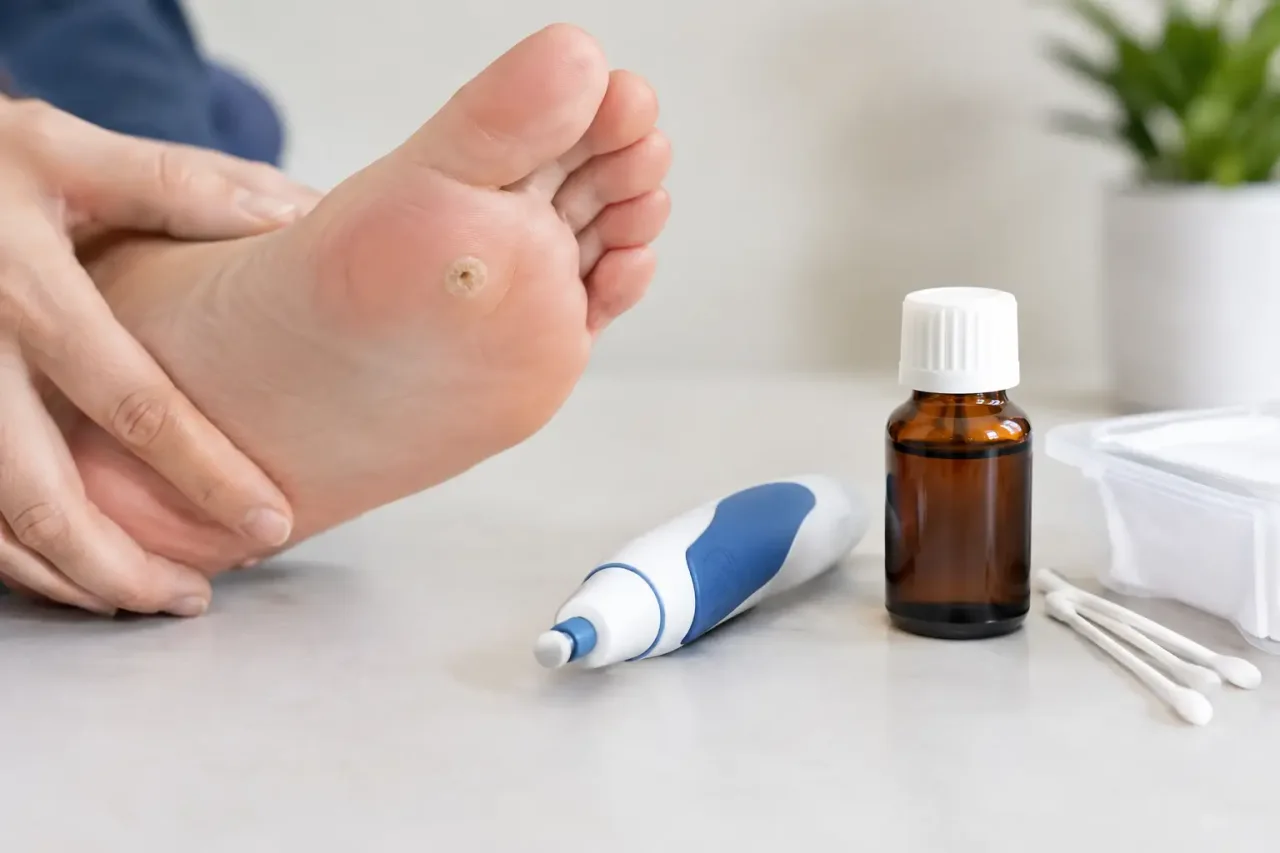
Swift versus acid treatment for verrucas
A verruca can seem like a small problem until it becomes painful on every walk, run or commute. When comparing Swift versus acid treatment, the right choice is not simply the newest treatment versus the most familiar one. It depends on whether the lesion is definitely a verruca, where it sits, how long it has been present, your general health and how much treatment burden you can realistically manage.
Verrucas are caused by strains of the human papillomavirus entering the skin, often through tiny breaks in the sole of the foot. Some clear without intervention, while others persist for months or years. Pressure from standing and walking can drive a verruca inwards, forming a hard layer of skin over the top and making it feel as though there is a stone in your shoe.
A proper podiatry assessment helps distinguish a verruca from a corn, callus or another skin lesion before treatment begins. These conditions can look similar, but need different management.
Swift versus acid treatment: the essential difference
Acid treatments, most commonly salicylic acid preparations, work by gradually breaking down thickened skin around and over the verruca. This exposes the affected tissue over time and may help the body's immune system recognise and clear the viral infection. It is usually a home-based treatment, applied regularly over a number of weeks.
Swift treatment uses precisely delivered microwave energy. The energy creates a controlled local response within the tissue, intended to stimulate an immune response against the virus. There is no cutting, freezing or dressing required after treatment, although the area may feel tender for a short period.
Both options can be clinically appropriate. Neither can guarantee clearance, because verrucas respond differently between individuals. The decision is therefore best made after assessment rather than based on convenience alone.
Acid treatment: what it involves
Salicylic acid is a well-established first-line option for many verrucas. Depending on the product, it may be supplied as a liquid, gel, plaster or medicated pad. Treatment generally requires consistent application, often daily, with regular removal of dead hard skin as advised by a clinician.
The strength of acid treatment is its accessibility. It can be effective for a small, uncomplicated verruca when it is used carefully and consistently. It is also a reasonable approach for patients who prefer to begin conservatively or who are comfortable following a home-care routine.
The challenge is that results can be slow. It may take several months of regular treatment, and missed applications can reduce its effectiveness. Acid can also irritate healthy surrounding skin if it spreads beyond the verruca, particularly when a product is applied without protecting the nearby skin.
Acid treatment is not suitable for everyone. People with diabetes, reduced circulation, peripheral neuropathy, impaired sensation or a history of foot ulceration should not self-treat a suspected verruca with acid without professional advice. In these situations, even a minor chemical burn or unnoticed skin break can become more significant.
It is also worth recognising that not every painful hard area on the sole is a verruca. Applying acid to a corn, for example, may damage the skin without resolving the cause of pressure that created it.
Swift treatment: what to expect
Swift is a clinic-based microwave treatment. During an appointment, the podiatrist places the treatment probe directly over the verruca and delivers short bursts of energy. The application itself is brief, but the sensation can be sharp and intense for a few seconds. This is usually well tolerated, although individual sensitivity varies.
A course commonly involves more than one appointment, spaced several weeks apart. The exact number of sessions depends on the verruca's size, duration, location and response to treatment. Stubborn, longstanding or mosaic verrucas may require a more extended plan than a single isolated lesion.
Unlike acid treatment, Swift does not rely on daily application at home. There is usually no need for a dressing, and patients can often continue normal activity afterwards. Some soreness, tenderness or temporary bruised sensation can occur, especially when a verruca is on a weight-bearing area. This should be discussed before treatment so that expectations are clear.
Swift can be an appealing option for people who have tried over-the-counter products without success, who struggle to maintain a daily treatment routine or who want a clinician-led programme. However, it is not automatically the best choice for every verruca. Suitability should be checked against your medical history, skin condition and treatment goals.
Which treatment is more effective?
There is no honest one-word answer. Clearance rates reported for verruca treatments vary considerably between studies and clinical settings. Verrucas may resolve spontaneously, may respond after a short course of treatment, or may remain resistant despite several approaches.
Acid treatment has the advantage of long-standing use and can work well when applied accurately and consistently. Its limitations are the commitment required, possible irritation and the fact that it may be difficult to use effectively on an awkward or very painful area.
Swift offers a different mechanism and a structured treatment pathway delivered by a clinician. It may be particularly worth discussing where a verruca has persisted despite sensible self-care. It does, however, involve appointment fees and short-lived treatment discomfort. A newer technology is not necessarily a better fit if a conservative approach remains appropriate.
The most useful question is not simply, “Which one works best?” It is, “Which approach is most suitable for this verruca, on this foot, for this person?”
Factors that shape the treatment plan
A podiatrist will consider several practical and clinical factors before recommending Swift or acid treatment. These include how long the lesion has been present, whether it is spreading, whether it hurts under pressure, and whether the skin markings are interrupted in a pattern consistent with a verruca.
Your activity level matters too. A runner with a painful lesion beneath the forefoot may need a different plan from someone with a small, painless verruca at the edge of the heel. Offloading pressure, reducing hard skin and protecting the area can be as relevant to comfort as treating the virus itself.
Previous treatment is also helpful information. If you have used acid only intermittently, it may be too early to call it unsuccessful. If you have followed a clear treatment programme for months with no change, a different option may be more reasonable. Likewise, a lesion that is changing rapidly, bleeding without explanation or does not look typical should be assessed rather than repeatedly treated at home.
Why diagnosis comes before treatment
At South London Foot Clinic, treatment decisions are led by examination and a clear discussion of the available options. For a skin concern such as a verruca, the priority is confirming the diagnosis, assessing any pressure-related pain and identifying factors that may affect healing or safety.
This avoids a generic treatment pathway. A painful lesion may need careful reduction of overlying hard skin before its true features can be assessed. In some cases, conservative care and review are appropriate. In others, a structured Swift programme or professionally supervised acid treatment may be the better route.
You should also be given realistic expectations. The aim is not to promise an instant cure, but to explain the likely commitment, expected sensations, possible side effects and signs that warrant review.
When to seek professional advice
Arrange an assessment if a suspected verruca is painful, spreading, persistent or affecting your work, sport or daily walking. Seek advice before using acid if you have diabetes, poor circulation, reduced feeling in your feet or an immune condition. Professional assessment is also sensible if you are unsure whether the lesion is a verruca at all.
Choosing between Swift and acid treatment becomes much easier once the diagnosis is clear and the plan reflects your foot health, lifestyle and previous treatment history. A considered assessment gives you a safer starting point and a practical route forward.


