


Painful Calluses Treatment That Brings Relief
A callus can look like a small patch of hard skin, yet make every step feel as though you are walking on a stone. Effective painful calluses treatment is not simply about making the skin look smoother. It involves finding out why that area is under repeated pressure, relieving the discomfort safely, and reducing the chance of it returning.
Calluses are common on the ball of the foot, heel, side of the big toe and beneath prominent toe joints. They can affect anyone, but are particularly troublesome for people who spend long periods standing, wear tight or poorly fitting footwear, run regularly, or have changes in foot shape and mechanics.
What causes a callus to become painful?
A callus is the body's response to friction and pressure. Skin thickens to protect itself, but if pressure continues, the hardened layer can become dense and painful. In some cases, there may be a small, concentrated core of hard skin within the callus. This can feel sharply painful on direct pressure and may be a corn rather than a simple callus.
The visible skin change is only part of the picture. Recurrent painful calluses often relate to an underlying mechanical issue, such as a prominent metatarsal head, a bunion, toe deformity, reduced cushioning beneath the forefoot, or the way the foot loads during walking. A change in activity, weight, footwear or gait can also be enough to make an established area suddenly symptomatic.
A lesion on the sole is not always a callus. Verrucae can develop beneath hard skin and may be painful when the foot is squeezed from the sides. Skin conditions, foreign bodies and, less commonly, wounds can also be mistaken for a callus. This is why persistent pain should not be self-diagnosed from appearance alone.
Painful calluses treatment begins with assessment
A podiatry assessment starts by examining the skin and identifying the exact location and character of the hard tissue. Your clinician will consider whether it is a callus, corn, verruca or another condition, then assess footwear, foot shape, joint movement and areas of excessive pressure.
This distinction matters. Removing thickened skin may give immediate relief, but it will not by itself change the force causing it to build up. If the problem is recurring in the same location, the treatment plan should address both the callus and the pressure pattern behind it.
For many patients, this is a straightforward clinical assessment. If pain is associated with a suspected joint, tendon or soft-tissue problem, diagnostic ultrasound may be considered where clinically appropriate. Imaging is not routinely required for every callus, but it can help clarify a related cause when symptoms and examination indicate it.
Safe treatment options for sore calluses
Professional reduction of hard skin
The most immediate treatment is careful removal of the callused skin using sterile podiatry instruments. This is often described as chiropody treatment. It can reduce pressure and improve comfort quickly, particularly when the callus has become thick or has a painful central area.
Professional reduction is controlled and tailored to the condition of the skin. It is very different from cutting or digging into a callus at home, which can cause bleeding, infection or an ulcer, especially where circulation or sensation is reduced.
It is also helpful to set realistic expectations. Hard skin may return if the underlying pressure remains. The aim is not merely repeated removal, but to establish an appropriate maintenance plan and, where possible, alter the mechanical cause.
Pressure relief and footwear changes
Footwear is often central to long-term relief. Shoes should have enough width and depth for the toes and forefoot, with a fastening that holds the foot securely rather than allowing it to slide forward. A supportive sole can reduce local loading, while worn-out shoes may no longer provide adequate cushioning.
A small adjustment can make a meaningful difference, but the right change depends on where the callus has formed. A callus beneath the ball of the foot may need cushioning or redistribution of pressure. One on the side of a toe may be driven by shoe width or toe position. Generic gel pads can help some people, but can make footwear tighter or move pressure elsewhere if they are poorly positioned.
Insoles, padding and custom orthotics
Where repeated loading is the main driver, offloading the affected area can be useful. This may involve temporary padding, accommodative insoles or custom orthotics designed following biomechanical assessment. Orthotics are not necessary for every callus, but they can be valuable where foot posture, joint movement or a structural prominence is contributing to recurrence.
The trade-off is that an orthotic needs to fit the shoe and be matched to the diagnosis. An insole that is too bulky, too firm or poorly fitted can create new pressure points. A structured review allows adjustments to be made based on how the foot responds during normal daily activity.
Home care between appointments
For otherwise healthy adults with a confirmed callus, regular moisturising can help keep skin supple and reduce cracking. A urea-based foot cream is often useful for dry, thickened skin. Using it consistently is more effective than applying a large amount occasionally.
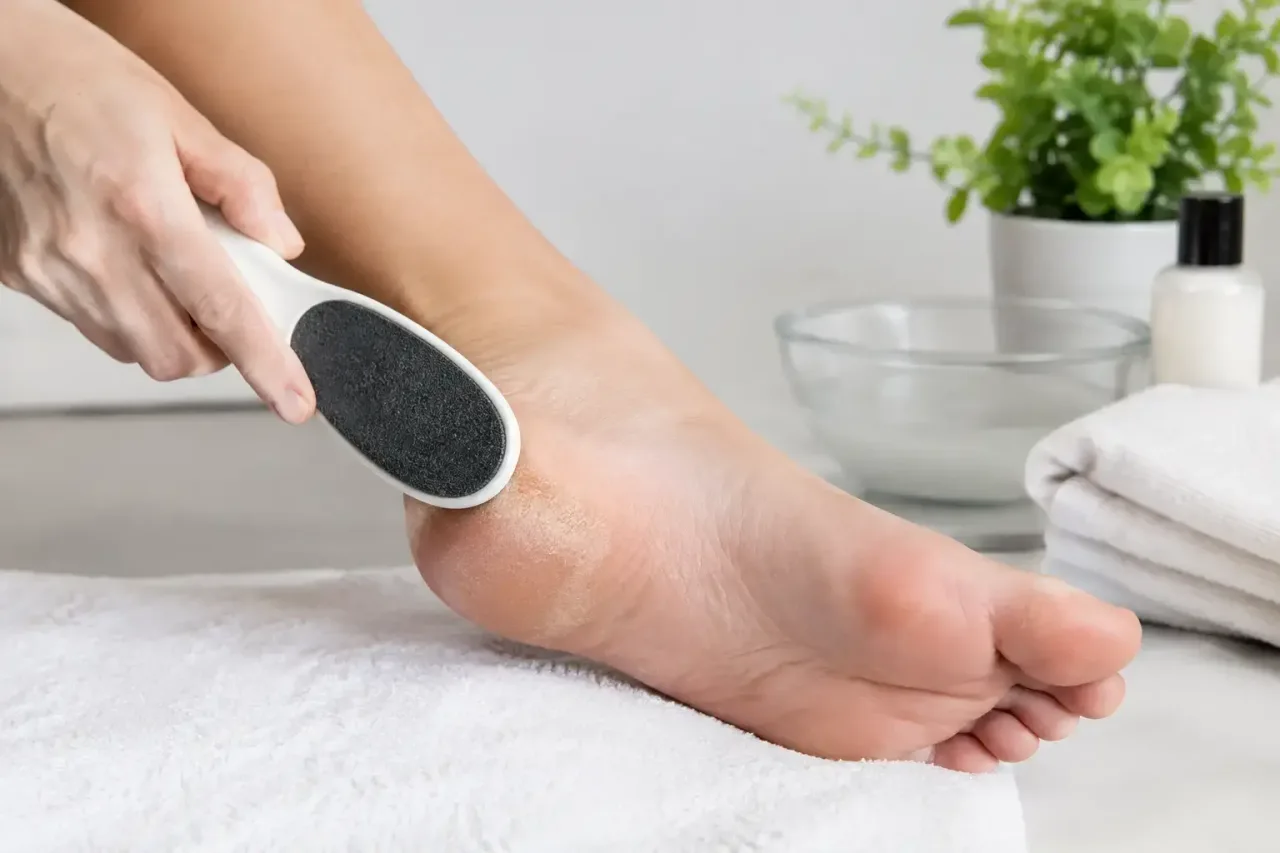
After bathing, gentle use of a foot file may be appropriate for superficial hard skin, provided there is no broken skin and you have normal sensation and circulation. Do not use blades, scissors or sharp callus cutters. Avoid trying to remove a deep or painful callus yourself.
Over-the-counter acid preparations containing salicylic acid are not suitable for everyone. They can damage healthy skin if applied inaccurately and should generally be avoided by people with diabetes, poor circulation, neuropathy, fragile skin or uncertainty about the diagnosis. If in doubt, seek podiatry advice before using them.
When should you see a podiatrist?
Arrange an assessment if a callus is painful, repeatedly returns, changes in appearance, or prevents you from walking or exercising comfortably. Prompt review is particularly sensible if there is redness, warmth, swelling, discharge, bleeding, a crack in the skin or signs of infection.
People with diabetes, reduced feeling in their feet, poor circulation, inflammatory arthritis or a history of foot ulcers should not attempt self-treatment for painful hard skin. Even a small break in the skin can become significant when healing is impaired.
Pain that seems out of proportion to the amount of visible hard skin also deserves assessment. The cause may be a corn, verruca, bursitis, joint irritation or another condition requiring a different approach.
A practical plan for longer-lasting comfort
Successful treatment usually follows a simple sequence: confirm the diagnosis, reduce the painful hard skin safely, identify the source of pressure, and review the response. Some patients only need occasional routine care and more suitable footwear. Others benefit from targeted padding, insoles or custom orthotic support because of the way their foot loads.
At South London Foot Clinic, assessment is designed to give patients a clear explanation of what is causing their symptoms before treatment is planned. This avoids treating every sore patch of skin as the same problem and helps ensure that care is proportionate to what your feet need.
Do not wait for a callus to become severe before seeking help. When walking changes to avoid pain, pressure can shift to the knee, hip or other areas of the foot. Early, well-directed care can restore comfort and help you return to your normal activity with greater confidence.


