


Metatarsalgia Treatment Options That Target the Cause
Pain beneath the ball of the foot can make every step feel guarded, particularly when standing at work, walking longer distances or returning to running. Effective metatarsalgia treatment options begin by establishing why the area is overloaded, rather than simply adding a pad or changing shoes without a clear diagnosis.
Metatarsalgia describes pain around the metatarsal heads – the prominent bones at the front of the foot, just behind the toes. It is a symptom rather than a single diagnosis. The same pain location may arise from pressure overload, a change in foot mechanics, inflammation of a joint, nerve irritation, a stress injury or thinning of the protective fat pad. Treatment needs to reflect that distinction.
Why a precise diagnosis changes treatment
Forefoot pain can develop gradually after an increase in walking, running or gym activity. It can also appear when footwear changes, body weight increases, calf tightness limits ankle movement, or a toe begins to alter position. In some cases, previous injury, arthritis or inflammatory conditions contribute to the problem.
A structured podiatry assessment considers where the pain is felt, what brings it on, the shape and movement of the foot, joint stability, footwear wear patterns and lower-limb function. The clinician will also examine for callus, swelling, altered sensation and tenderness around the joints, tendons and nerves.
Diagnostic ultrasound may be appropriate where the clinical examination suggests soft-tissue inflammation, a bursa, joint changes, tendon involvement or a possible neuroma. It can help clarify the structures contributing to pain and inform treatment during the same care pathway. Ultrasound does not replace every form of imaging. If a stress fracture, significant joint damage or another bony condition is suspected, an X-ray, MRI or referral may be more suitable.
Metatarsalgia treatment options based on the cause
The most appropriate treatment often combines pressure reduction with correction of the factors causing repeated overload. Improvement is usually progressive. The aim is to make walking comfortable while allowing the irritated tissues to settle and reducing the likelihood of recurrence.
Footwear changes and activity modification
Footwear is often the first practical area to address. A shoe with enough width and depth at the forefoot can reduce compression around the toes and ball of the foot. A cushioned sole and a stable base can also reduce the force transmitted through the metatarsal heads. Very thin-soled shoes, high heels and footwear that bends sharply through the painful area may aggravate symptoms.
For active patients, reducing high-impact training for a short period may be necessary. This does not always mean stopping all exercise. Depending on the diagnosis, cycling, swimming, strength work or a gradual reduction in running volume may keep activity manageable while the forefoot recovers. Continuing to train through sharp or escalating pain is rarely productive, especially where a stress injury has not been excluded.
Padding, insoles and custom orthotics
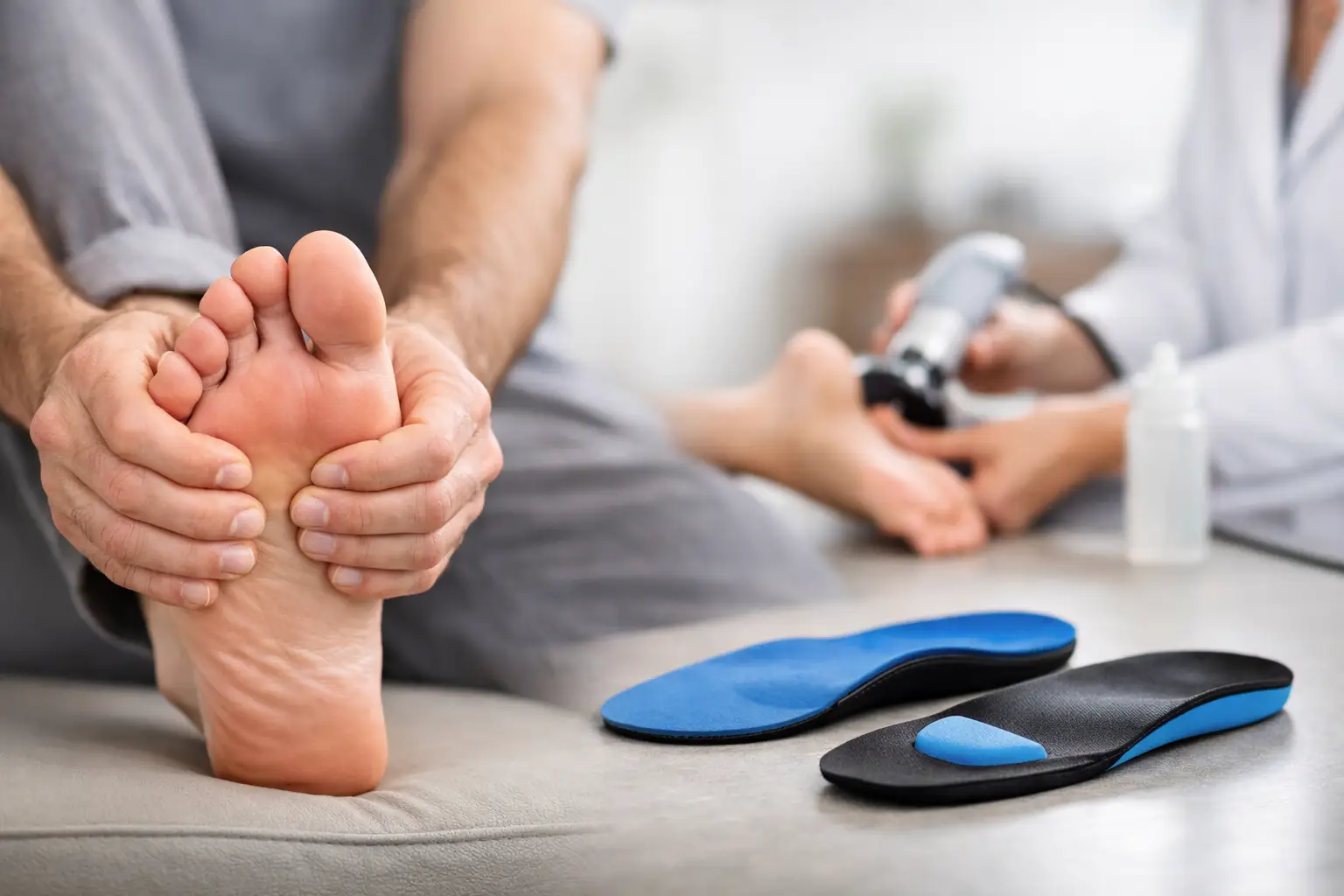
Metatarsal pads and offloading insoles can redistribute pressure away from the painful area. Their position matters. A pad placed directly under the sore spot can increase discomfort, while one positioned just behind the metatarsal heads may support the foot and reduce load more effectively.
An off-the-shelf insole may be sufficient for straightforward, short-term symptoms. Custom orthotics are considered when foot mechanics, recurrent pain, toe deformity, significant callus formation or a particular activity pattern means a more precise intervention is needed. They can be designed to improve pressure distribution, accommodate prominent areas and support motion through the foot.
Orthotics are not a universal solution, and they should not be issued without examination. A device that is appropriate for one person can be unhelpful for another, particularly if the main issue is nerve pain, a joint injury or a footwear problem.
Treating skin pressure and toe changes
Callus beneath the ball of the foot is often evidence of concentrated pressure. Professional reduction of hard skin may provide immediate relief, but it is only part of treatment. If the pressure pattern is not addressed through footwear, padding or orthotic intervention, the callus commonly returns.
Toe deformities, such as clawing or hammer toes, can alter how weight passes through the forefoot. In these cases, treatment may include toe props, accommodative orthotics and footwear advice. The right approach depends on whether the deformity is flexible, whether there is joint pain, and how much it affects daily activity.
Rehabilitation and movement factors
Limited ankle movement, calf tightness and weakness or poor control through the foot and lower leg can all increase loading at the forefoot. Rehabilitation may include calf stretching where appropriate, strengthening exercises and a graded return to walking or sport.
This part of care is particularly relevant for runners and people whose symptoms developed after a change in training. Footwear and insoles may reduce pain, but rehabilitation addresses the movement and capacity factors that can continue to drive overload. Exercises should be chosen according to the assessment rather than copied from a general programme online.
Anti-inflammatory treatment and injections
Where inflammation is present around a joint or bursa, medication may be discussed with an appropriate prescribing clinician or pharmacist, taking account of medical history and other medicines. Pain relief can help during recovery, but it should not mask symptoms that require further assessment.
Injection treatment may be considered for selected conditions when conservative treatment has not been sufficient and the diagnosis is clear. For example, an ultrasound-guided steroid injection may be appropriate for specific inflammatory problems in the forefoot. It is not a first-line answer for all metatarsalgia and it is not suitable for every patient.
The expected benefit, alternatives and potential risks should be discussed carefully. Repeated steroid injections in the forefoot may carry risks, including tissue weakening or changes to the fat pad, so decisions need to be clinically justified. Some patients benefit more from mechanical offloading and rehabilitation than from an injection.
When forefoot pain needs prompt assessment
Do not assume persistent pain under the ball of the foot is simply metatarsalgia. Prompt assessment is advisable if pain followed a significant injury, is severe at rest, causes marked swelling or bruising, or makes weight-bearing difficult. Pain that is increasingly localised over a metatarsal bone may need assessment for a stress fracture.
People with diabetes, reduced circulation, peripheral neuropathy or a history of foot ulceration should seek professional advice early, particularly if there is broken skin, redness, warmth or a new area of pressure. Numbness, burning pain or pain shooting into the toes may also point towards nerve involvement rather than uncomplicated pressure overload.
What to expect from a consultation-led plan
A useful appointment should leave you with more than a label for your pain. You should understand which tissues appear involved, whether imaging is indicated, what can be changed immediately, and how progress will be reviewed. At South London Foot Clinic, this may include podiatry examination and diagnostic ultrasound where clinically appropriate, followed by discussion of the findings and a treatment plan matched to them.
Some patients respond quickly once footwear and pressure redistribution are corrected. Others need a more gradual programme, especially where symptoms have been present for months or where running, work demands or toe changes continue to load the area. A clear diagnosis gives you the best basis for making those choices with confidence.
If pain beneath your forefoot is changing the way you walk, seek assessment before compensating becomes a longer-term problem elsewhere in the foot, ankle, knee or back.


