


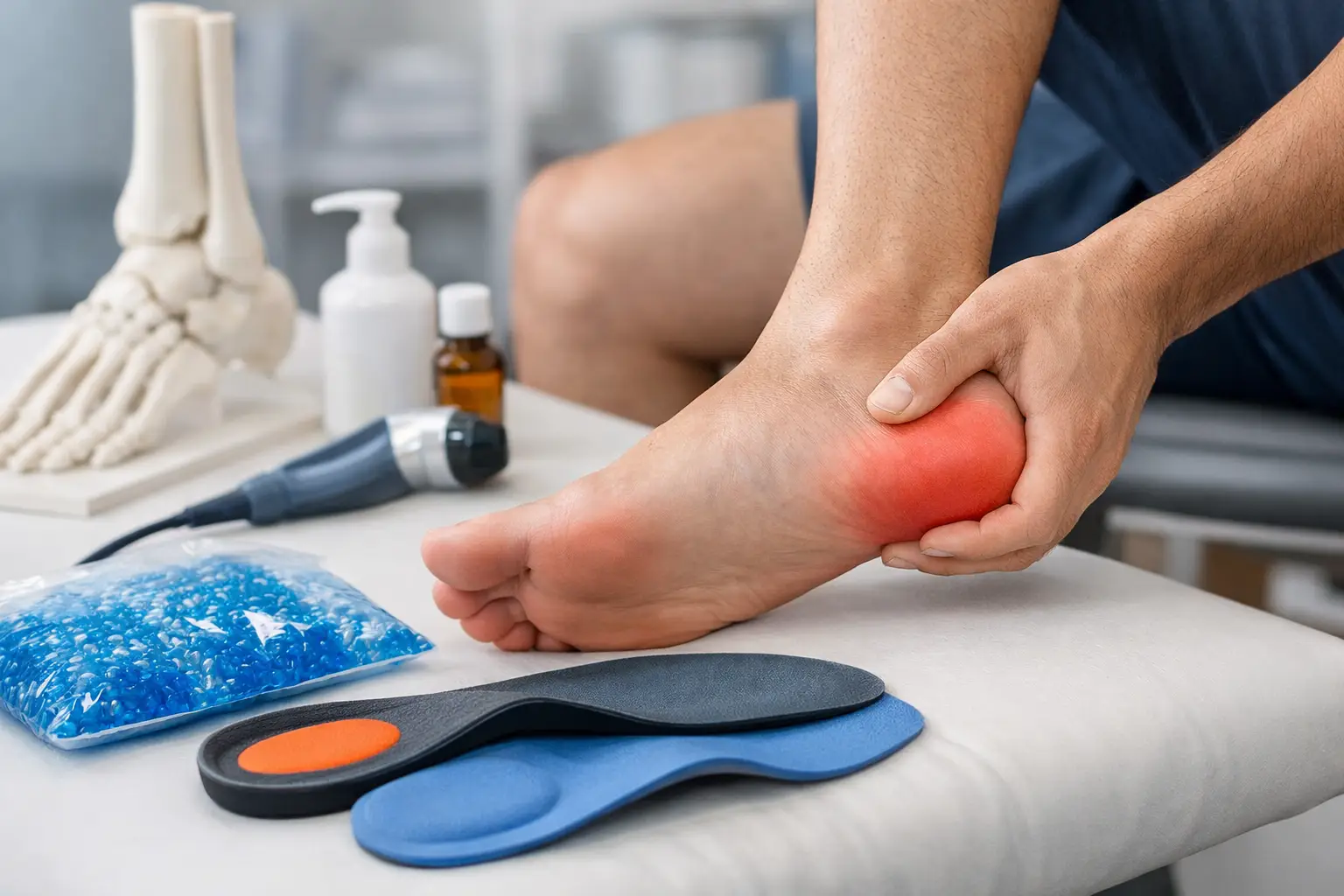
Heel Pain Treatment That Matches the Cause
That first step out of bed can tell you quite a lot. If your heel feels sharp, tight or bruised before easing slightly as you move, it is easy to assume the problem is straightforward. In practice, effective heel pain treatment depends on something more precise than the location of the pain alone. The same symptom can come from plantar fasciitis, a tendon problem, nerve irritation, a bursitis, an inflamed heel pad or, less commonly, a stress injury.
This is why a good assessment matters. Heel pain often responds well to treatment, but only when the plan matches the tissue involved, the duration of symptoms and the load going through the foot and ankle each day. A generic stretch sheet may help some people. For others, it delays progress because it does not address the actual cause.
Why heel pain treatment should start with diagnosis
Heel pain is often described as if it were a single condition. It is not. Pain under the heel may suggest plantar fascia involvement, but pain at the back of the heel raises different questions, particularly around the Achilles tendon, retrocalcaneal bursa or the insertion where the tendon meets bone.
The pattern of symptoms helps. Pain with first steps, pain after sitting, tenderness on one side of the heel, swelling, burning sensations or pain that worsens during running all point in slightly different directions. Your footwear, activity levels, work demands and previous injuries matter as well. A person who stands all day in safety shoes may need a different plan from a runner training for a half marathon, even if both point to the same area when asked where it hurts.
Clinical examination is the starting point. In some cases, diagnostic ultrasound is also useful because it helps confirm which structure is involved and whether there are signs of thickening, tearing, inflammation or degeneration. That does not mean every patient needs imaging. It means imaging should be used when it adds clarity and supports treatment decisions.
Common causes of heel pain
Plantar fasciitis and plantar fasciopathy
This is one of the most common reasons for pain under the heel. Strictly speaking, long-standing cases are often more degenerative than inflammatory, which is why the term plantar fasciopathy can be more accurate. Patients usually report pain near the inside of the heel, especially with first steps in the morning or after rest.
The plantar fascia helps support the arch and manage load during walking and running. If that load exceeds what the tissue can tolerate, pain develops. Weight gain, changes in activity, reduced ankle movement, calf tightness and unsupportive footwear can all contribute.
Achilles insertional pain
Pain at the back of the heel may come from the Achilles tendon where it inserts into the calcaneus. Some people notice stiffness first thing in the morning, while others feel pain during hills, faster running or pushing up onto the toes. This area can be more irritable than mid-portion Achilles problems because compression also plays a role.
Bursitis and heel pad irritation
A bursa is a small fluid-filled sac that can become irritated near the back of the heel. Heel pad syndrome is different and tends to feel more like a deep bruise under the central heel. Both can be mistaken for plantar fasciitis if the assessment is too quick.
Nerve irritation and referred pain
Not all heel pain starts in the heel. Nerves around the ankle can become irritated, and pain can occasionally be referred from higher up the limb or from the lower back. If symptoms include tingling, burning or numbness, those possibilities need to be considered rather than treated as a standard soft tissue strain.
What good heel pain treatment usually involves
Load management first
Most heel pain improves when the irritated structure is given a manageable amount of load rather than complete rest or unrestricted activity. That balance matters. Too much loading keeps symptoms active. Too little may lead to deconditioning and delayed recovery.
This is where advice needs to be specific. Some patients need a temporary reduction in running volume. Others need help modifying walking routes, time on their feet at work or gym activity. The goal is not simply to stop pain today but to create a recovery plan the tissue can tolerate over the next several weeks.
Footwear and orthotic support
Footwear can make a significant difference, particularly with plantar heel pain and some Achilles-related problems. A completely flat, unsupportive shoe may increase strain on painful structures. Equally, a very rigid shoe is not always the answer if it aggravates another part of the foot.
In some cases, temporary padding, heel lifts or custom orthotics are appropriate. The key point is that these should be prescribed for a reason. Orthotics can reduce stress on the plantar fascia, improve force distribution and support foot mechanics, but they are one part of treatment rather than a universal fix.
Exercises and rehabilitation
Rehabilitation is often what turns short-term relief into longer-term improvement. For plantar fascia pain, this may include calf work, plantar fascia loading and exercises to improve ankle movement and foot strength. For Achilles-related heel pain, the programme needs to reflect whether the problem is insertional or non-insertional, because the loading strategy differs.
This is one area where online advice can be misleading. The right exercises at the wrong stage can stir symptoms up. The wrong dosage can do the same. Progression matters, and so does monitoring the response over the next 24 to 48 hours.
Hands-on treatment and pain reduction
Manual treatment can be useful when it supports the wider plan. Soft tissue work, fascial manipulation and targeted mobilisation may help improve movement, reduce local sensitivity and make rehabilitation easier to tolerate. On their own, however, they are rarely the full answer for persistent heel pain.
If pain is high and preventing progress, reducing irritability becomes a sensible first step. That may involve taping, offloading strategies or a temporary change in activity while the underlying issue is addressed.
When more advanced treatment may be appropriate
Some patients improve with footwear changes, structured rehabilitation and time. Others do not, especially when symptoms have been present for months or treatment has been too general.
Injection therapy
Injection treatment can be appropriate in selected cases, but it should follow a diagnosis rather than replace one. A steroid injection may help settle pain in some inflammatory presentations. It is not suitable for every heel condition, and the decision depends on the tissue involved, the chronicity of symptoms and the risks versus expected benefit.
For example, an injection around one structure may be reasonable, while around another it may need far more caution. This is exactly why precise assessment matters before proceeding.
Imaging-led decisions
When symptoms are persistent, atypical or not responding as expected, imaging may help clarify the picture. At South London Foot Clinic, ultrasound is used within the assessment process when clinically indicated, so treatment decisions are tied directly to what is being found rather than guessed at. That is particularly valuable when deciding between rehabilitation alone, orthotic intervention, injection therapy or onward referral.
How long heel pain treatment takes
Patients often want a simple timeline, but recovery is influenced by cause, severity and how long the pain has been present. Mild, recent plantar heel pain may settle within weeks if managed early. Long-standing symptoms, recurrent pain or tendon-related issues can take longer and usually need a more structured programme.
The important thing is that progress is rarely measured by pain disappearing all at once. More often, it shows up as less pain with first steps, better walking tolerance, reduced flare-ups and a gradual return to normal activity. Setbacks can happen, particularly if load increases too quickly. That does not always mean treatment is failing. It may simply mean the plan needs adjusting.
When to seek professional assessment
Heel pain that has persisted for more than a couple of weeks, keeps returning or is limiting work, walking or sport is worth assessing properly. The same applies if the pain is severe, associated with swelling, feels hot, follows a sudden injury or is accompanied by numbness or altered sensation.
A structured assessment helps avoid two common problems. The first is under-treating something that needs more than rest and a change of trainers. The second is over-treating a problem before the diagnosis is clear. Good care sits in the middle: examine thoroughly, explain what is driving the pain, then build treatment around that finding.
Heel pain can be frustrating because it interferes with the ordinary parts of life – walking to the station, standing at work, exercising, even getting out of bed. The encouraging part is that most cases do improve with the right plan. The sooner the cause is identified, the easier it is to move from guessing to treatment that genuinely fits.


