


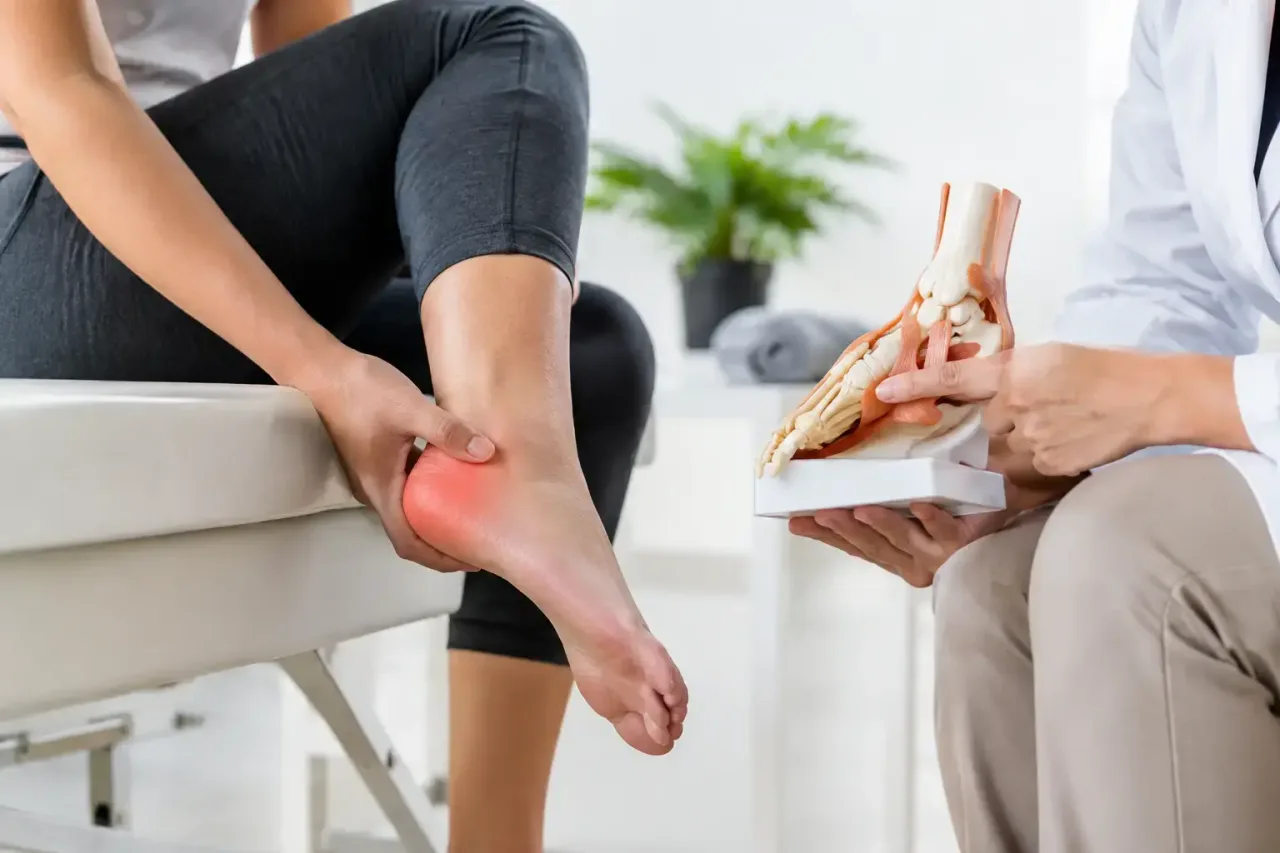
Heel Bursitis Treatments That Match the Cause
A sore, swollen area at the back of the heel can make shoes feel unbearable, particularly when the shoe counter presses against it. Heel bursitis treatments can be very effective, but the right approach depends on whether the bursa is truly the source of pain and what has irritated it in the first place. Achilles tendon problems, bony prominence at the heel and other causes of heel pain can produce similar symptoms, so accurate assessment should come before treatment.
What is heel bursitis?
A bursa is a small, fluid-filled sac that reduces friction between tissues. At the back of the heel, the retrocalcaneal bursa sits between the Achilles tendon and the heel bone. When it becomes irritated or inflamed, it can cause pain deep at the back of the heel, stiffness and tenderness when the area is compressed.
Some people also develop irritation in the superficial bursa, which lies nearer the skin where footwear rubs. This is often associated with a visible sore or swollen area over the back of the heel. The distinction matters because pressure from shoes may be the main problem in one person, while tendon loading, foot mechanics or a bony heel prominence may be driving symptoms in another.
Pain from heel bursitis is commonly worse when walking uphill, climbing stairs, rising onto the toes or wearing firm-backed shoes. However, these symptoms can overlap with Achilles tendinopathy, insertional Achilles pain, heel bone stress injury, inflammatory arthritis and, more rarely, infection. This is why persistent heel pain should not be managed on symptoms alone.
Why diagnosis guides heel bursitis treatments
A structured assessment looks at more than the painful spot. Your clinician will ask when symptoms began, whether there was a change in activity or footwear, how the pain behaves through the day and whether there are signs of systemic inflammation. They will examine the heel, Achilles tendon, ankle movement, calf strength, walking pattern and the way pressure is distributed through the foot.
Diagnostic ultrasound may be useful where the diagnosis is unclear or symptoms have not settled. It can help identify bursal fluid or thickening, assess the Achilles tendon and show whether there are changes around its insertion into the heel bone. Ultrasound findings always need to be considered alongside the clinical examination. A scan is not simply a picture of the problem - it helps guide a treatment plan that fits the actual source of pain.
At South London Foot Clinic, assessment, ultrasound where clinically indicated, and discussion of the findings can be incorporated into a clear treatment pathway. This avoids assuming that every painful heel requires the same intervention.
First-line treatment: reduce irritation without stopping everything
For many patients, the early priority is to settle the tissues rather than push through pain. Complete rest is not always necessary or helpful, but temporarily reducing the activities that reliably provoke symptoms gives the bursa and surrounding tendon time to calm down. Running hills, repeated jumping, long walks in unsupportive shoes and activities that force the ankle into deep upward bend may need to be modified for a period.
Footwear is often a practical starting point. Shoes with a rigid heel counter can repeatedly press on a superficial bursa, while very flat shoes may increase strain at the back of the heel for some people. A shoe with a softer heel collar, adequate depth and a modest heel-to-toe drop can reduce direct pressure and traction through the Achilles complex. The best choice depends on the individual foot and the type of bursitis suspected.
A temporary heel lift may also be considered. By slightly reducing the stretch placed on the Achilles tendon during walking, it can make painful movement more tolerable. It is not a cure in itself, and it should be reviewed rather than used indefinitely, particularly if it changes comfort elsewhere in the foot, knee, hip or lower back.
Simple measures such as avoiding rubbing footwear and applying a cold pack wrapped in a cloth for short periods may help with pain after activity. Anti-inflammatory medication can be appropriate for some people, but it is not suitable for everyone and should be discussed with a pharmacist, GP or prescribing clinician, especially if you have stomach, kidney, heart or blood-pressure concerns.
Rehabilitation is more than stretching
Stretching is frequently recommended for heel pain, but aggressive calf stretching can aggravate insertional Achilles symptoms and retrocalcaneal bursitis by compressing structures at the back of the heel. This is a common reason that well-intended self-treatment fails.
Rehabilitation should be matched to the diagnosis. It may include carefully progressed calf strengthening, ankle mobility work, balance exercises and a graded return to walking, running or sport. If the tendon is involved, loading exercises are usually introduced in a way that respects pain levels and avoids excessive compression at the heel insertion.
The aim is not simply to make the heel less sore this week. It is to improve the capacity of the calf-Achilles-foot complex so that everyday activity does not repeatedly recreate the same irritation. Progress is usually measured by symptoms during activity, the response over the following 24 hours and improvements in strength and function.
Orthotics and pressure management
Custom orthotics are not needed for every case of heel bursitis. They are most useful when assessment identifies a mechanical factor that is contributing to repeated overload, such as limited ankle movement, significant foot posture issues or an activity pattern that places excess demand through the Achilles and rearfoot.
An orthotic may help redistribute pressure, support foot function or work alongside a heel lift where appropriate. It should be prescribed for a clear clinical reason, not as a generic solution for any heel pain. In other cases, a simple footwear adjustment, temporary padding or a change in training load may be more relevant.
When injections may be considered
If symptoms remain significant after a well-managed period of activity modification, footwear changes and rehabilitation, an injection may be discussed. This decision should follow a clear diagnosis, particularly where pain is close to the Achilles tendon.
A corticosteroid injection can reduce inflammation in selected cases, but it is not a routine first step for posterior heel pain. Steroid placed in or too close to the Achilles tendon can weaken tendon tissue and increase the risk of rupture. For this reason, careful assessment and, where indicated, ultrasound guidance are important when considering injection treatment around the heel.
There are also situations where an injection is unlikely to resolve the main problem. If ongoing shoe pressure, a prominent heel bone, marked tendon degeneration or unmanaged training errors are driving symptoms, the relief may be temporary unless those factors are addressed. Your clinician should explain the likely benefit, the risks and the rehabilitation required afterwards before recommending any procedure.
When to seek assessment promptly
Most heel bursitis is not an emergency, but certain symptoms need timely medical review. Seek urgent advice if the heel becomes markedly red, hot or rapidly swollen, if you feel unwell or feverish, or if there is a wound or discharge near the painful area. These may indicate infection rather than simple mechanical irritation.
A sudden pop at the back of the ankle, immediate weakness when pushing off or an inability to stand on tiptoe can indicate an Achilles tendon injury and should also be assessed urgently. Persistent pain that is worsening, pain at rest or at night, and symptoms that do not improve despite sensible footwear and activity changes all justify a more detailed examination.
A realistic recovery plan
Recovery time varies. Mild irritation linked to a new pair of shoes or a short-term increase in activity may improve within a few weeks once the trigger is removed. Symptoms involving the Achilles tendon, long-standing mechanical overload or a prominent heel bone often require a more gradual programme over several weeks or months.
The most useful heel bursitis treatments are rarely the quickest-looking option. They are the ones that identify the painful structure, reduce the factor irritating it and rebuild confidence in walking, work and exercise at a pace the heel can tolerate. If pain keeps returning or you are unsure what is causing it, a focused assessment can replace trial and error with a treatment plan that makes clinical sense.


