


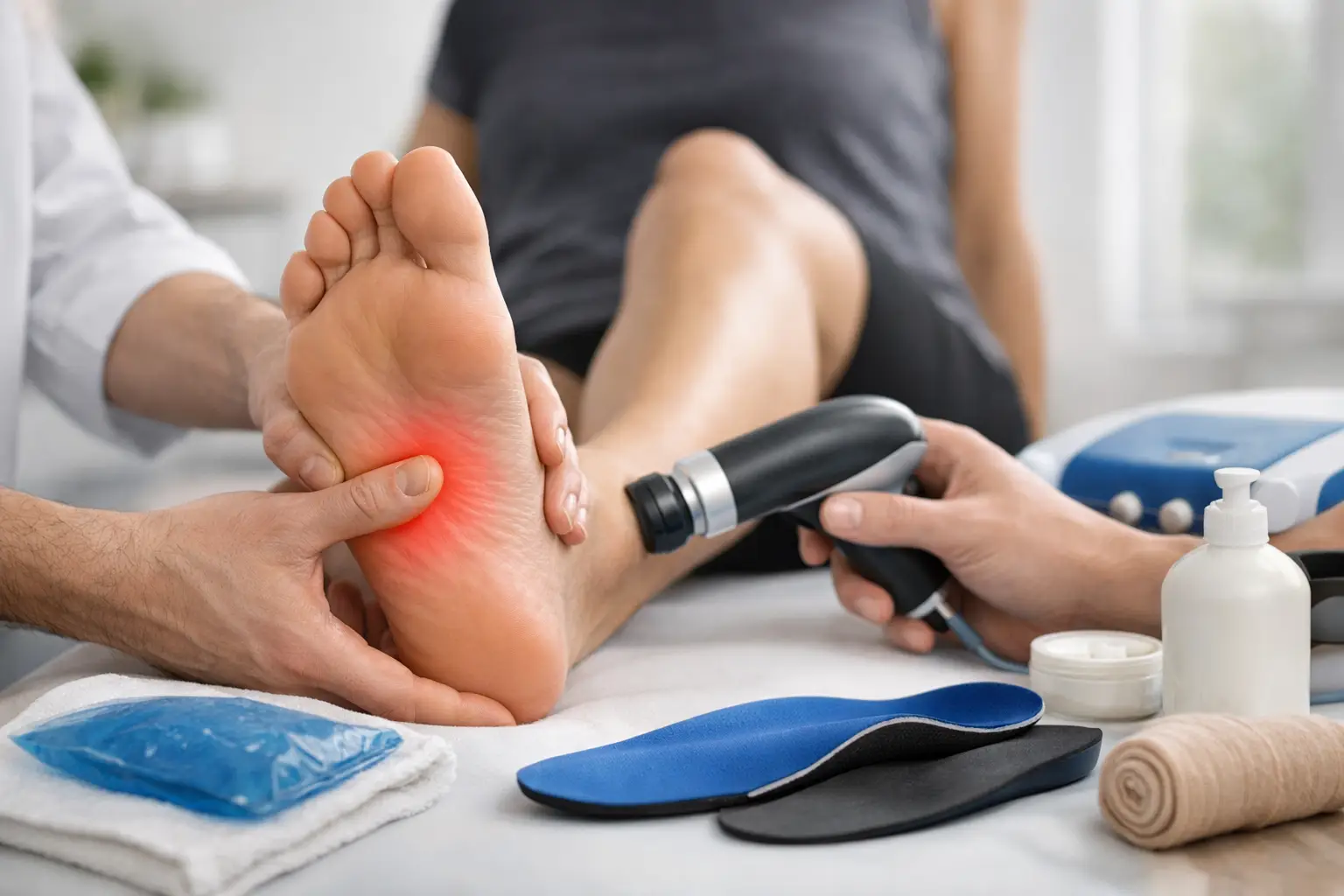
Best Treatments for Plantar Fasciitis
That first step out of bed can be the giveaway. If the pain sits under the heel or along the arch, eases slightly as you move, then returns after standing, walking or exercise, plantar fasciitis is often the cause. When people search for the best treatments for plantar fasciitis, what they usually want is not a long list of options – they want to know what is most likely to work for their type of pain, and how to avoid wasting time on the wrong treatment.
Plantar fasciitis is common, but it is not always simple. Heel pain can also come from a fascial tear, nerve irritation, fat pad problems, inflammatory joint disease or referral from elsewhere in the foot and leg. That is why good treatment starts with diagnosis rather than assumption. If the underlying problem is unclear, even sensible treatments can fail.
What plantar fasciitis actually is
The plantar fascia is a thick band of tissue running from the heel into the arch. It helps support the foot and manage load as you walk and run. Plantar fasciitis usually develops when this tissue becomes overloaded over time. Despite the name, it is not always a purely inflammatory problem. In many cases, there is a mix of irritation, tissue change and reduced tolerance to load.
That matters because treatment should not focus on pain relief alone. Short-term relief can help, but lasting improvement usually depends on reducing strain on the tissue while gradually improving its capacity.
The best treatments for plantar fasciitis start with assessment
Before discussing insoles, injections or exercises, the most useful step is a proper podiatry assessment. The pattern of symptoms, foot mechanics, calf flexibility, activity levels, footwear, body weight, work demands and previous injuries all affect treatment choice.
In some cases, diagnostic ultrasound is clinically helpful. It can show thickening of the plantar fascia, local tissue changes, partial tearing or other causes of heel pain. It also helps guide treatment planning with more confidence. For patients who have had pain for months, have not improved with basic care, or have unusually severe symptoms, that extra clarity can save time.
A structured assessment also helps answer a key question: is this straightforward plantar fasciitis, or is something else contributing to the pain?
First-line treatment: reduce irritation and improve load tolerance
For most patients, the best early treatment is a combination of load management, stretching, footwear advice and targeted rehabilitation. This is less dramatic than some people hope for, but it is often the foundation of recovery.
Load management means adjusting the activities that keep aggravating the heel. That does not always mean complete rest. It usually means temporarily reducing the volume of walking, running or standing that pushes the pain beyond what the tissue can tolerate. For runners, that may involve modifying mileage, pace or hills. For people on their feet at work, it may mean planning periods of rest and changing footwear.
Calf and plantar fascia stretching can help, especially when there is marked tightness through the calf complex or strong morning pain. The detail matters here. A rushed stretch once a day is rarely enough. A clinician should explain which structures need addressing, how often to do it, and how to judge whether it is helping.
Strengthening is often overlooked. If the foot and lower limb are not managing force well, the fascia continues to absorb more strain than it should. A rehabilitation plan may include calf strengthening, foot intrinsic work and progressive loading exercises matched to the stage of symptoms.
Footwear and orthotics
Shoes can make a noticeable difference. Very flat, unsupportive or worn-out footwear often increases strain on the plantar fascia. A more supportive trainer or shoe with appropriate cushioning can reduce symptoms, particularly during the early stages of recovery.
Orthotics can also be effective, but they are not all the same. Some patients do well with well-selected prefabricated devices, while others need custom orthotics because of more specific biomechanical issues, recurrent symptoms or failed previous treatment. The aim is not to make the foot passive. It is to alter loading in a way that reduces stress on the painful tissue and allows recovery.
This is where one-size-fits-all advice often falls short. An orthotic that helps one person may irritate another, depending on foot shape, activity demands and the true source of pain.
Hands-on treatment and adjunctive care
Manual treatment can be useful when stiffness, calf tightness or altered tissue mechanics are contributing to symptoms. This may include fascial manipulation or other hands-on techniques as part of a wider treatment plan. On its own, manual therapy is rarely the full answer, but it can improve comfort and make rehabilitation easier to progress.
Taping can also help in the short term. It is particularly useful for patients who need quick symptom relief while waiting for a more durable intervention such as orthotic support or exercise-based improvement. Again, this is usually a bridge rather than a final solution.
When symptoms persist: shockwave and injection treatment
If heel pain has become persistent, and a well-managed programme of conservative treatment has not produced enough improvement, escalation may be appropriate. This is the point where many patients ask which option is best.
There is no single answer for everyone. It depends on symptom duration, scan findings, severity, previous treatment and how functionally limited you are.
Extracorporeal shockwave therapy is commonly used for chronic plantar fasciitis. It aims to stimulate a healing response in stubborn tissue and can be helpful in cases that have not settled with exercises, stretching and footwear changes alone. It is not an instant fix, and discomfort during treatment varies, but for selected patients it is a reasonable next step.
Steroid injection may be considered where pain is pronounced and progress has stalled. It can reduce pain and settle local irritation, which may then allow a patient to engage more effectively with rehabilitation. However, it is not a cure in itself. There are trade-offs, including the possibility of symptom recurrence and the need to use injections carefully in relation to tissue quality. This is one reason imaging and clinical judgement matter. If there is concern about a partial tear or significant degeneration, the decision-making becomes more nuanced.
Patients sometimes assume that an injection is the strongest treatment and therefore the best one. In practice, it is simply one option within a structured pathway.
What about night splints and home remedies?
Night splints can help some patients, especially those with severe first-step pain in the morning. By keeping the calf and plantar fascia in a more lengthened position overnight, they may reduce the sharp tightening that occurs during rest. Some people tolerate them well. Others find them uncomfortable and stop using them. They can be useful, but they are not essential for every case.
Ice, massage with a chilled bottle, and over-the-counter pain relief may reduce discomfort in the short term. These measures can be sensible additions, particularly during a flare-up, but they do not address the full mechanical picture. If the pain keeps returning, more targeted assessment is usually needed.
Why some cases do not settle quickly
The most frustrating cases are often those treated generically for months. If the diagnosis is incomplete, if the patient has continued to overload the tissue, or if treatment has focused only on symptom relief, progress can be slow.
Other factors may also prolong recovery. These include reduced ankle mobility, higher body weight, prolonged standing at work, rapid increases in training, poor footwear, inflammatory conditions and long-standing biomechanical overload. Persistent symptoms do not necessarily mean the condition is severe, but they do mean the treatment plan may need to be more precise.
At South London Foot Clinic, that precision comes from a consult, scan, discuss and treat approach where imaging is used when clinically indicated and treatment is matched directly to findings rather than guesswork.
When to seek professional help
If heel pain has lasted more than a few weeks, keeps returning, affects work or exercise, or feels severe enough to change the way you walk, it is sensible to have it assessed. The same applies if you have tried stretching, rest and shoe changes without clear improvement.
A good consultation should leave you with a working diagnosis, an explanation of why the pain has developed, and a realistic treatment plan. That may be straightforward conservative care, or it may involve imaging, orthotic prescription, injection therapy or a more structured rehabilitation pathway.
The real answer to what works best
The best treatments for plantar fasciitis are the ones matched to the actual source of heel pain, the stage of tissue irritation and the way your foot is being loaded day to day. For many patients, that means a combination of activity modification, stretching, strengthening and better footwear. For others, it may also mean orthotics, shockwave therapy or carefully selected injection treatment.
The key is not finding the most aggressive option. It is finding the right option at the right time, based on a clear diagnosis. Heel pain can be persistent, but with a structured plan and the right level of intervention, it is usually very treatable. If your symptoms have started to dictate how far you walk, how you train or how comfortably you work, getting clarity early is often the most useful treatment of all.


