


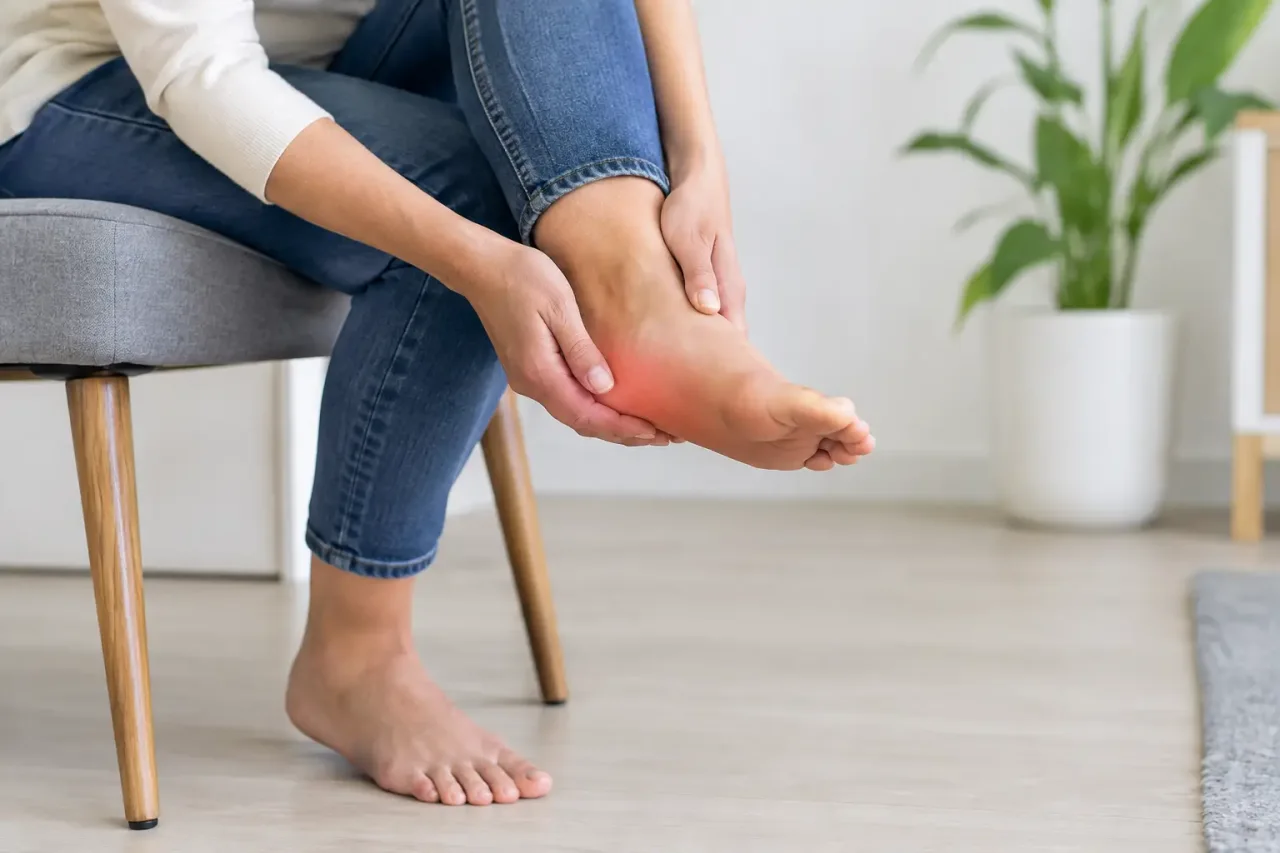
Aching Feet After Standing: Causes and Relief
A full shift behind a counter, a day of teaching, or several hours travelling around London can leave you with aching feet after standing. Often, the discomfort settles with rest. However, pain that keeps returning, changes how you walk, or becomes increasingly localised deserves a proper assessment rather than repeated short-term fixes.
Foot pain after prolonged standing is not one diagnosis. The feet, ankles, calves, knees and hips all share the work of supporting your body weight. A change in footwear, workload, walking pattern or tissue capacity can therefore cause symptoms in more than one area. The most useful treatment starts by identifying which structure is irritated and why it is being overloaded.
Why standing makes feet ache
Standing places a continuous load through the foot, particularly when you are relatively still on a hard surface. Unlike walking, where the load moves through the foot and muscles contract and relax rhythmically, static standing can leave tissues working for long periods without much variation.
By the end of the day, this may feel like a general tired, burning or heavy sensation through the soles. It can also expose a more specific problem. Pain under the heel may point towards irritation of the plantar fascia or heel fat pad. Pain in the ball of the foot can reflect overload of the metatarsal heads, joint irritation, a neuroma or reduced cushioning. Aching along the inside of the ankle or arch may involve the posterior tibial tendon, while pain across the top of the foot can be related to footwear pressure, joint irritation or a stress injury.
The location, timing and behaviour of symptoms matter. First-step pain in the morning is different from pain that only appears after four hours at work. Swelling, numbness and a sharp focal pain each require a different line of clinical questioning.
Common reasons for aching feet after standing
Footwear that does not match the job
Shoes can contribute, but they are not always the sole cause. Thin soles on hard floors provide limited cushioning, while worn-out midsoles may no longer absorb load effectively. Very flat shoes can place extra demand on the plantar fascia and calf complex in some people. High heels shift pressure forwards onto the ball of the foot and can shorten the calf muscles over time.
A shoe that is too narrow may compress the forefoot and aggravate corns, calluses, nerve irritation or toe joint pain. Conversely, a shoe with too much movement around the heel may make the foot work harder for stability. The right option depends on your foot shape, occupation and the condition being treated. A heavily cushioned trainer is not automatically the answer for every painful foot.
Sudden increases in standing or activity
Tissues adapt to load gradually. Starting a new job, returning after illness, attending a busy event, or increasing training alongside a standing occupation can exceed that capacity. The result may be soreness that initially settles overnight but returns sooner each day.
This does not mean you must avoid activity altogether. Complete rest can reduce strength and confidence. A better approach is usually to modify the load temporarily, then build tolerance in a planned way once the source of pain is understood.
Reduced support or altered foot mechanics
Changes in the way the foot moves can redistribute pressure. A flatter arch, a stiff big-toe joint, limited ankle movement, calf tightness or weakness in the muscles that support the foot and ankle may all make prolonged standing less comfortable.
Orthotics can be useful when they address a clear mechanical need, such as reducing strain on a painful structure or redistributing pressure away from an overloaded area. They should be prescribed following assessment, rather than selected solely because they are marketed as arch supports. Some patients need temporary support during recovery; others benefit more from footwear changes and rehabilitation.
Skin, nail and joint problems
Not every painful foot after standing is caused by muscles or tendons. A hard corn can create intense, pinpoint discomfort under pressure. Callus can make the forefoot feel bruised. An ingrowing toenail, inflamed joint, arthritis or a painful bunion can also become more noticeable after hours in shoes.
Routine podiatry treatment may provide significant relief where painful skin or nail conditions are part of the problem. If pain persists after the obvious pressure point has been addressed, further assessment is still worthwhile because more than one issue can be present.
What you can do in the short term
If the pain is mild, recent and clearly linked to an unusually demanding day, simple measures are reasonable. Choose footwear with sufficient room in the toe box and a stable, supportive sole. Avoid relying on shoes that are visibly worn down or unevenly compressed. Where possible, alternate standing with short periods of walking or sitting, rather than remaining in one position for long stretches.
After work, gentle ankle and calf movement can help if stiffness is contributing. Elevating the feet may reduce a feeling of heaviness or minor swelling. A cold pack wrapped in a cloth can be used for short periods if an area feels irritated, but it should not be applied directly to the skin. Over-the-counter pain relief may be suitable for some people, although this should be checked with a pharmacist or clinician if you have other health conditions or take regular medication.
Avoid trying to force through sharp pain. Equally, avoid aggressively rolling, stretching or massaging a very tender area in the hope of breaking up the problem. Symptoms may settle briefly while the underlying overload continues.
When foot pain needs assessment
A clinical assessment is appropriate if symptoms last beyond a couple of weeks, recur whenever you stand for work, or stop you exercising and carrying out normal daily tasks. It is particularly useful where the pain is in one precise location, there is repeated swelling, or changing shoes has made little difference.
During a podiatry appointment, the assessment should consider more than the painful spot. Your clinician may examine joint movement, muscle strength, walking pattern, footwear, areas of pressure and the response of the foot to loading. This helps distinguish between conditions that can feel similar but require different management.
Diagnostic ultrasound may be appropriate where a tendon, fascia, soft tissue mass or inflammatory change needs closer examination. It is not required for every painful foot, and it does not replace a thorough examination. When clinically indicated, however, it can help clarify whether there is thickening, fluid, tearing or tissue irritation, allowing treatment to be planned with greater confidence.
At South London Foot Clinic, this consult, scan, discuss and treat approach is designed to give patients a clear explanation of the likely cause of their symptoms and the practical next steps. Treatment may include footwear advice, targeted rehabilitation, hands-on treatment, custom orthotics or, in selected cases, injection therapy. The appropriate option depends on the diagnosis, your health history and what your day-to-day demands require.
Red flags not to ignore
Seek urgent medical advice if foot pain is accompanied by any of the following:
- a hot, red, rapidly swollen foot or ankle, particularly if you feel unwell or have a fever
- an inability to bear weight after an injury, or pain that is severe and worsening
- new numbness, weakness, colour change or a cold foot
- an open wound, spreading redness or signs of infection, especially if you have diabetes, poor circulation or reduced sensation
Persistent night pain, unexplained swelling or pain following a significant increase in running or walking should also be assessed promptly. Stress injuries can be difficult to identify early and may worsen if normal loading continues.
A structured route back to comfortable standing
The goal is not simply to get through the next shift with less pain. It is to understand why your feet are struggling with the demands placed on them and to restore enough capacity that standing feels manageable again.
For some people, replacing worn footwear and adjusting their daily breaks is enough. For others, the answer lies in treating a skin lesion, reducing pressure through an orthotic, improving calf and foot strength, or investigating a tendon or joint problem more closely. Pain that repeatedly appears after standing is useful information from your body. A clear diagnosis turns that information into a realistic plan for recovery.


