


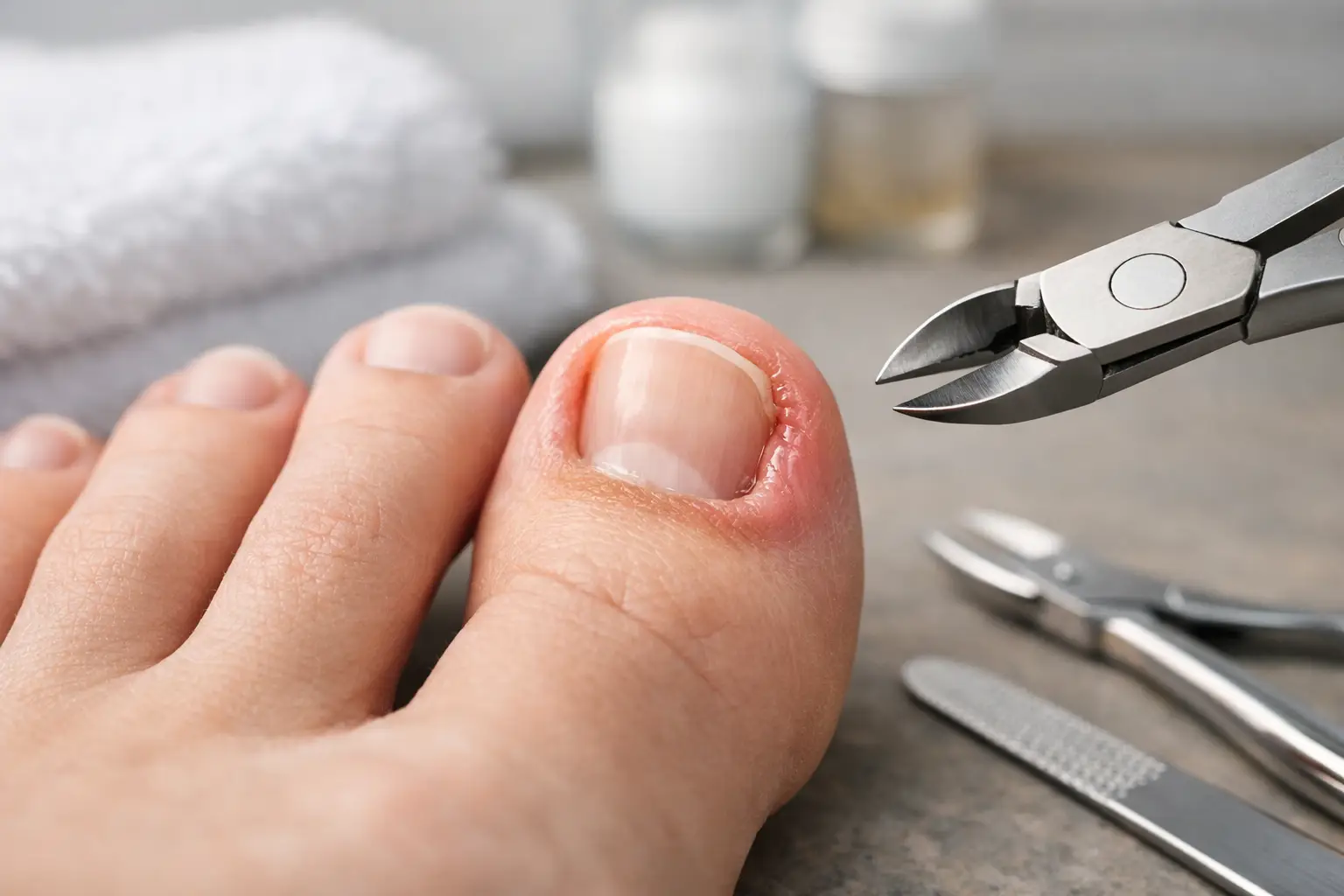
Why Your Toenail Keeps Growing In Repeatedly
A toenail that repeatedly catches, presses into the skin or becomes painful at one corner is more than a minor inconvenience. If you are wondering why your toenail keeps growing in, the usual reason is that the edge of the nail is continuing to irritate or pierce the surrounding nail fold. Unless the cause is addressed, the same cycle can return even after the soreness settles.
An ingrowing toenail is common, particularly on the big toe, but it should not be ignored when there is persistent pain, swelling, discharge or recurrent infection. A podiatry assessment can establish whether the issue is simply nail shape and pressure, or whether there is an underlying factor that needs a more definitive treatment plan.
Why does a toenail keep growing in?
A nail does not usually grow directly into the skin. More often, the skin at the side of the toe is being pressed against a sharp, curved or widened nail edge. As the nail grows forwards, that edge continues to catch the nail fold. In some cases, inflammation causes the skin to swell around the nail, making an already narrow space even tighter.
The problem can occur on one side of the nail or both. It may begin as tenderness when wearing shoes, then progress to redness and swelling. If bacteria enter through broken skin, the area may become infected, producing fluid, bleeding easily or developing overgrown, bright-red tissue beside the nail.
Nail shape and inherited tendency
Some people naturally have more curved, fan-shaped or thickened nails. A curved nail can exert pressure on the skin along its sides, especially as it grows out. This tendency may run in families, which is one reason an ingrowing toenail can recur despite careful foot hygiene.
Nail shape can also alter after injury, fungal nail disease or repeated pressure from footwear. A nail that becomes thicker or more distorted is harder to trim accurately and may place more pressure on the nail folds.
Cutting the nail too short or down the sides
Trimming the corners deeply is one of the most frequent causes of an ingrowing nail. It can feel logical to remove the painful corner, but this often leaves a small pointed section behind. As the nail grows, that point can act like a splinter and push into the skin.
Picking at the edge of the nail can have a similar effect. It may temporarily reduce the pressure but can damage the surrounding skin, introduce infection and leave an irregular nail edge that continues to catch. Nails are generally best cut straight across, without digging into the corners, although a very curved or thick nail may need professional reduction rather than repeated home trimming.
Footwear pressure, sport and toe trauma
Shoes with a narrow toe box can press the skin against the nail. This is particularly common in safety footwear, formal shoes, football boots and running shoes that are too short or too narrow at the front. Even well-fitted shoes can become problematic if feet swell during long shifts, exercise or warm weather.
Repeated impact may also change the nail. Runners and people who play court sports can experience pressure at the front of the shoe, while a stubbed toe or dropped object can damage the nail plate or nail-growing area. The nail may then grow back thicker, ridged or more curved.
Sweaty feet and skin changes
Excess moisture softens the skin around the nail, making it easier for the nail edge to penetrate. This can affect people whose feet perspire heavily, those who wear enclosed footwear for long periods, and teenagers and young adults, who commonly experience increased sweating.
Conversely, dry, hard skin around the nail can also create pressure. The precise cause varies from person to person, which is why recurring symptoms should be assessed rather than treated as a routine nail-cutting problem.
When an ingrowing toenail needs prompt assessment
Early tenderness may respond to reducing pressure from footwear and keeping the toe clean and dry. However, a painful or infected nail can deteriorate quickly. Do not attempt to cut deeply into an inflamed nail fold or force cotton, floss or sharp instruments beneath the nail at home.
Arrange a podiatry appointment promptly if the toe is increasingly painful, red or swollen, if there is discharge or bleeding, or if the nail has become difficult to manage. Seek urgent medical advice if you develop spreading redness, feel unwell, have a fever or notice red streaking from the toe.
You should also avoid self-treatment and seek professional advice early if you have diabetes, poor circulation, peripheral neuropathy, a weakened immune system or a history of delayed wound healing. In these circumstances, even a small break in the skin can carry greater risk.
What treatment can help when a toenail keeps growing in?
Treatment should match the stage and cause of the problem. A mildly painful nail without significant infection may be managed conservatively. A podiatrist can reduce the offending nail edge safely, remove hard skin that is adding pressure and advise on nail-cutting technique and footwear. Where appropriate, the nail can be carefully dressed or the skin protected while inflammation settles.
If there is infection, the area needs clinical assessment. Antibiotics are not always required for an ingrowing toenail, particularly when the source of irritation remains in place. Removing or reducing the nail spike is often the key step, although a clinician may recommend medication where there are signs of spreading infection or other clinical concerns.
For a nail that repeatedly grows into the same side of the toe, partial nail surgery is often the most reliable longer-term option. This procedure removes only the problematic strip at the edge of the nail, rather than the whole nail in most cases. It is usually performed under local anaesthetic, so the toe is numb during treatment.
The podiatrist may then treat the corresponding section of the nail matrix, the area that produces the nail, to prevent that narrow strip from regrowing. The aim is to leave a slightly slimmer nail with enough width to look and function normally, while removing the section responsible for repeated irritation.
There are trade-offs to consider. Conservative treatment avoids a procedure and can be appropriate for a first episode or a clearly correctable cause, such as poor trimming. However, it may not prevent recurrence where nail shape is the main problem. Nail surgery involves a recovery period and dressing care, but it can provide a more permanent solution for a repeatedly painful nail.
What happens during a nail surgery assessment?
A proper assessment starts with examining the toe, nail shape, surrounding skin and any signs of infection. Your medical history matters too, including circulation concerns, diabetes, medication, allergies and previous nail procedures. This helps determine whether conservative care, partial nail surgery or another approach is suitable.
At South London Foot Clinic, treatment planning is based on a clear explanation of what is causing the nail to embed and what each option is designed to achieve. If nail surgery is recommended, you should understand the expected healing process, dressing requirements, activity considerations and when to return for follow-up before deciding how to proceed.
After surgery, the toe is usually kept dry initially and redressed according to the clinician’s instructions. Some tenderness and drainage can occur as the area heals, but worsening pain, increasing redness, odour or discharge should be reviewed. Most people can continue with everyday activity relatively soon, although sport, swimming and restrictive footwear may need to wait until healing is sufficiently advanced.
Reducing the chance of recurrence
Once the toe has settled, regular nail care and footwear choices can make a meaningful difference. Cut nails straight across where possible and avoid cutting them excessively short. If the corner is difficult to reach without digging, leave it alone and have it assessed. Choose shoes with enough depth and width at the front for the toes to sit without compression, especially for work and exercise.
Keep feet dry where practical, change socks after sport or long shifts, and address fungal nail changes rather than repeatedly filing or cutting a thickened nail yourself. If running or another activity repeatedly bruises the toenail, shoe fit and available toe room should be reviewed.
A recurrent ingrowing toenail is not something you need to keep managing between painful flare-ups. A structured assessment can identify whether simple nail care is enough or whether a targeted procedure offers the more dependable route back to comfortable walking.


