


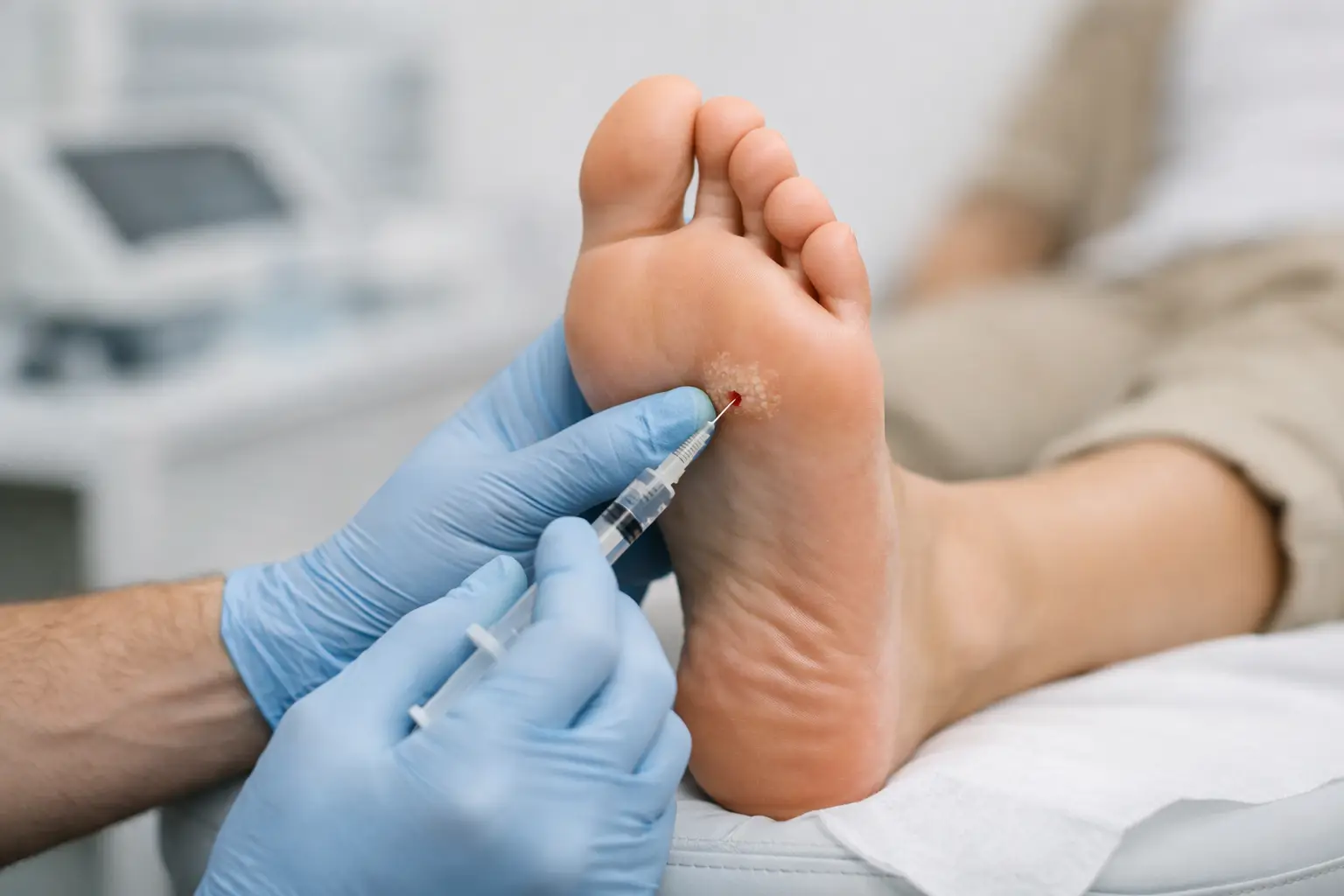
How Verruca Needling Treatment Works and When It May Help
A verruca that persists despite over-the-counter acids, freezing treatments or simply waiting can become more than a cosmetic nuisance. It may be painful under pressure, affect how you walk or exercise, and spread to nearby skin. Understanding how verruca needling treatment works can help you decide whether it is a sensible next step after a proper podiatry assessment.
Verruca needling, sometimes called Falknor needling, is a procedure designed to stimulate an immune response to the virus causing the verruca. Rather than relying on repeated surface treatments alone, it creates controlled tiny injuries through the verruca tissue. The aim is to introduce viral material to deeper layers of the skin, where the body’s immune system is more likely to recognise it and respond.
What is a verruca?
A verruca is a wart on the sole of the foot, usually caused by strains of human papillomavirus, or HPV. The virus enters through tiny breaks in the skin and causes an area of thickened, rough tissue. Verrucae can have small dark dots within them, which are tiny blood vessels, although this feature is not present in every case.
Pressure through the sole can push the lesion inward, making it feel like there is a small stone in the shoe. Some verrucae remain painless, while others become uncomfortable during walking, running or prolonged standing. They can occur as a single lesion or as a cluster.
Not every hard or painful area on the foot is a verruca. Corns, callus, foreign-body reactions and some less common skin conditions can look similar. This is why assessment matters before treatment is selected.
How verruca needling treatment works
The principle behind needling is immunological. HPV tends to remain in the outer layers of skin, where it may not trigger a sufficiently strong immune response. Surface treatments such as salicylic acid work by gradually breaking down infected skin. Needling takes a different route by disrupting the lesion and introducing material from it into the dermis, the deeper layer of skin that has a richer blood supply and more active immune surveillance.
A sterile needle is used to make multiple small punctures through the verruca until the tissue has been thoroughly treated. This creates local bleeding, which is an intended part of the procedure. The controlled injury is thought to alert the immune system to the presence of the virus.
The response is not simply about removing the visible verruca on the day. The hope is that the immune system will then recognise the virus more effectively over the following weeks. In some people, this can also lead to improvement in untreated verrucae elsewhere on the foot. That is a potential benefit, not a guarantee, and the response varies between individuals.
Why only one lesion may be treated
Where several verrucae are present, a clinician may choose the largest or most established lesion for needling rather than treating every area. The goal is to generate an immune response, not necessarily to mechanically remove every visible lesion in one appointment.
This approach can make recovery more manageable, particularly for patients whose verrucae are spread across a weight-bearing area. The choice of lesion and treatment plan should be based on its location, size, symptoms, previous treatment and your general health.
What happens at the appointment?
Verruca needling is normally carried out under local anaesthetic. The area is first examined and the diagnosis confirmed. The skin is then cleaned, and an injection is used to numb the treatment area. You may feel a brief sting from the anaesthetic, but should not feel sharp pain once it is working.
The thickened surface skin is usually reduced before needling begins. The clinician then uses a fine sterile needle to puncture the verruca tissue repeatedly. The procedure itself is relatively short, though the full appointment allows time for assessment, consent, anaesthetic and aftercare advice.
A dressing is applied afterwards. Because the foot carries body weight, the treated area may be tender once the anaesthetic wears off. Most patients can leave the clinic independently, although planning a quieter day and wearing accommodating footwear is sensible.
What to expect during recovery
The treated site commonly feels sore for a few days. There may be bruising, local swelling or a small amount of discharge on the dressing. A blood blister or scab can develop as the area heals. These effects are usually expected consequences of the procedure rather than signs that something has gone wrong.
Aftercare instructions should be followed closely. This usually includes keeping the initial dressing clean and dry for the advised period, then changing it as directed. Avoid picking at the site or attempting to remove healing tissue yourself. High-impact sport, swimming and prolonged pressure may need to be reduced temporarily, depending on the location and extent of treatment.
Healing time varies. The skin may settle within a few weeks, but it can take longer to judge whether the verruca itself is resolving because the immune response develops over time. A follow-up assessment provides an opportunity to review the result, manage residual hard skin and decide whether further treatment is required.
Contact the treating clinic promptly if you develop increasing redness, heat, swelling, worsening pain, pus-like discharge, fever or any concern about infection. These complications are uncommon, but they require clinical advice rather than self-treatment.
Is needling suitable for every verruca?
No single verruca treatment is right for everyone. Needling may be considered for persistent lesions, painful verrucae, or cases that have not responded to an appropriate course of first-line treatment. It can be particularly useful when there are multiple lesions and the aim is to encourage a wider immune response.
However, suitability depends on more than the verruca itself. Your clinician will consider circulation, sensation in the feet, diabetes status, immune function, medication, skin healing history and any previous reaction to local anaesthetic. People with poor circulation, significant neuropathy, an active infection or certain medical conditions may need a different approach or additional precautions.
Pregnancy, anticoagulant medication and a history of fainting with injections do not automatically rule treatment out, but they should be discussed beforehand. A clear medical history allows treatment to be planned safely.
Needling compared with other verruca treatments
Conservative treatments such as salicylic acid are often suitable for straightforward verrucae, particularly where the lesion is small and the patient is able to apply treatment consistently. They require patience and regular use over weeks or months.
Cryotherapy freezes the skin, while Swift treatment uses precisely controlled microwave energy to stimulate a local immune response without breaking the skin in the same way as needling. Needling is a more invasive procedure because it involves local anaesthetic and deliberate puncturing of the lesion. Its advantage is that it is often completed in one main treatment session, although follow-up remains important.
The best option depends on your symptoms, treatment history and preferences. A painless verruca that is improving may be best monitored or managed conservatively. A painful lesion that is limiting activity may justify a more procedural approach. Treatment should be based on diagnosis and realistic expectations, not on a promise of immediate clearance.
Questions worth asking before treatment
Before agreeing to needling, ask what diagnosis has been made, why this treatment is being recommended, what recovery is likely to involve and how success will be reviewed. It is also reasonable to ask about alternatives, costs, possible complications and what happens if the verruca remains.
At South London Foot Clinic, the focus is on confirming the cause of your symptoms and discussing the most appropriate treatment pathway before a procedure is undertaken. For a persistent or painful verruca, that clarity can be as valuable as the treatment itself.
A verruca need not be something you simply put up with. If it is painful, spreading or resisting treatment, a podiatry assessment can provide a structured plan and help you choose the next step with confidence.


