


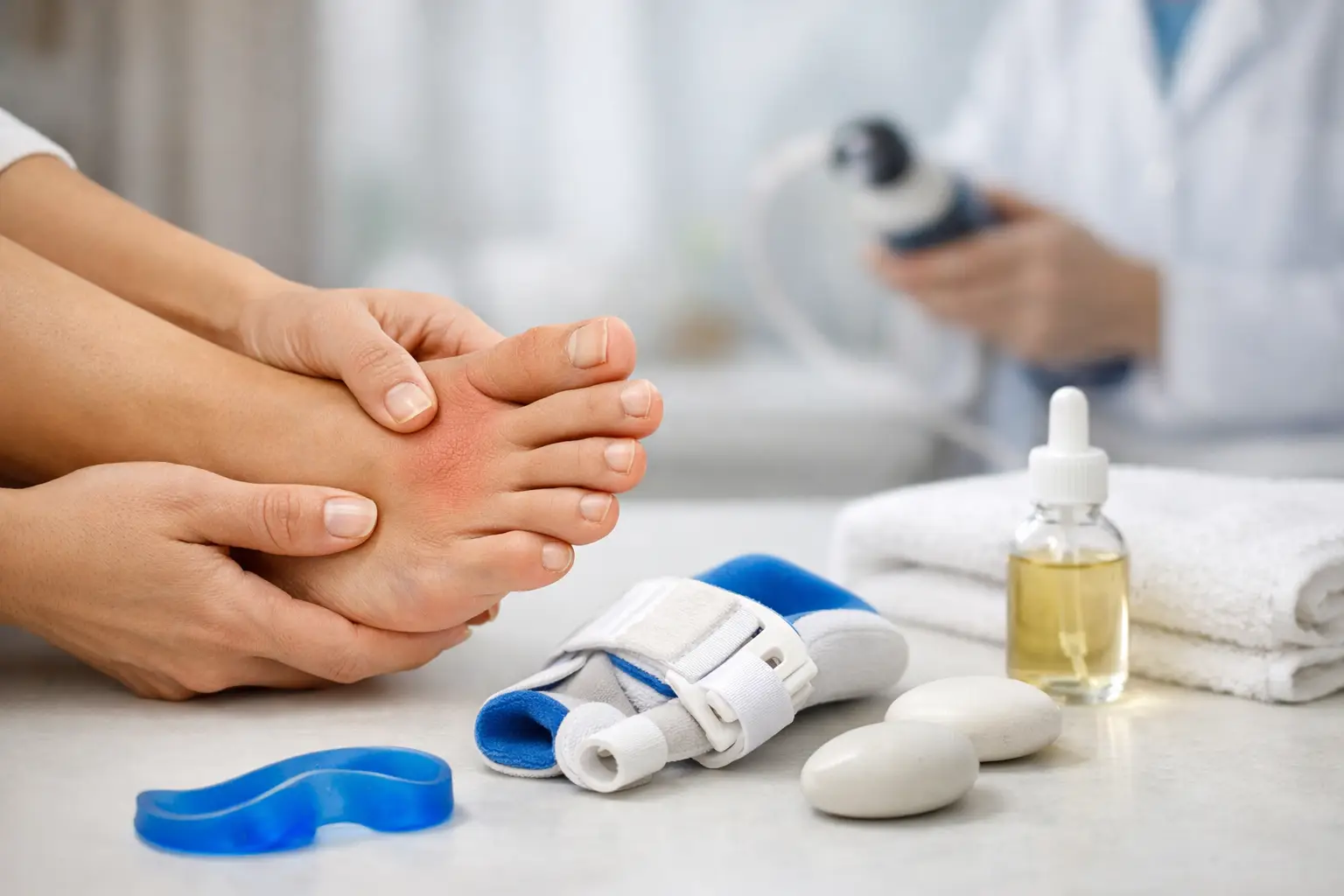
Best Treatments for Bunions That Relieve Pain
A bunion may look like a simple bump at the side of the big toe, but the pain it causes is often more complex. The best treatments for bunions are not about forcing the toe straight overnight. They are about identifying what is being irritated, reducing pressure on the joint and putting a realistic plan in place for walking, work, exercise and longer-term foot health.
For some people, a change of footwear is enough to settle symptoms. For others, pain persists because the joint is inflamed, footwear is compressing the area, or the way the foot loads during walking is repeatedly stressing the joint. A structured assessment helps distinguish between these possibilities before treatment is chosen.
What a bunion is and why it becomes painful
A bunion, clinically known as hallux valgus, develops when the big toe gradually moves towards the second toe and the joint at its base becomes more prominent. It is not simply a growth of bone. It is a change in joint position and foot mechanics, which can make the inside of the forefoot wider and more vulnerable to pressure.
Some bunions cause little or no discomfort. Others become painful because shoes rub the prominence, the joint lining becomes inflamed, or the big toe is no longer moving efficiently during walking. Pain beneath the ball of the foot, callus formation, lesser-toe crowding and difficulty finding comfortable shoes can all develop alongside it.
Bunions can run in families, although inherited foot shape is usually more relevant than inheriting the bunion itself. Tight or narrow footwear can aggravate symptoms, but it is rarely the only cause. Flat feet, reduced ankle movement, joint laxity, previous injury and the demands of work or sport may also influence how the foot loads.
The best treatments for bunions depend on the cause of pain
Conservative treatment cannot reverse the underlying bony alignment of an established bunion. It can, however, reduce pain, protect irritated tissue and improve function very effectively. The right combination depends on your symptoms, foot shape, activity level and the stage of the condition.
Footwear is often the first treatment to address
Shoes should have enough width and depth across the forefoot to avoid direct compression over the bunion. A soft upper can reduce rubbing, while a fastening helps hold the heel and midfoot securely rather than allowing the foot to slide forwards. A lower heel usually places less load through the forefoot than a high-heeled shoe.
This does not mean every shoe must be bulky or medical-looking. The practical aim is to find footwear that matches the width and shape of your foot. If a shoe leaves redness over the joint, causes numbness in the toes or makes pain noticeably worse during the day, it is unlikely to be a helpful choice regardless of its label or price.
Padding and simple protection can reduce rubbing
A silicone bunion sleeve, gel pad or carefully placed protective dressing may reduce friction between the shoe and the prominent joint. These measures can be useful for a particular pair of shoes or a short period when symptoms are flaring.
They should not make footwear tighter. If adding a pad creates more pressure inside the shoe, it may worsen the problem. A podiatrist can advise on whether simple padding is appropriate and where it should sit.
Toe spacers and exercises have a limited but useful role
A toe spacer may make the big toe feel more comfortable in some people, particularly if there is mild crowding between the first and second toes. It is not a correction for a significant bunion and should be removed if it causes pressure, tingling or pain.
Exercises can support mobility and muscle control around the foot and ankle. Gentle big-toe movement, calf stretching and exercises that improve control of the arch may be included in a rehabilitation plan. These are most useful when they are targeted to the way you move, rather than selected from a generic online routine. They can improve comfort and function, but they will not remove the bony prominence.
Orthotics can redistribute pressure where needed
Custom orthotics are designed to alter how forces pass through the foot during standing and walking. For a painful bunion, they may help by improving support through the arch, reducing excess pressure beneath the forefoot or making the big toe joint work more efficiently.
Orthotics are not automatically necessary for every bunion. They are most useful when assessment identifies a loading pattern that is contributing to symptoms, such as marked pronation, forefoot overload or pain beneath the lesser metatarsals. An orthotic should fit the shoe you intend to wear and should be reviewed if it causes new discomfort. A well-made device is part of a treatment plan, not a substitute for suitable footwear.
Pain relief and inflammation management may be appropriate
When a bunion is acutely sore, short-term measures such as reducing aggravating activity, applying a cold pack wrapped in a cloth and using appropriate over-the-counter pain relief may help. Anti-inflammatory medicines are not suitable for everyone, particularly people with certain stomach, kidney, heart or medication-related risks, so advice from a pharmacist, GP or clinician is sensible.
In selected cases, injection treatment may be considered for inflammation in or around the joint. An injection can reduce a painful inflammatory flare, but it does not straighten the toe or remove the bunion. It should only be offered after a clinical assessment, with a clear explanation of the likely benefit, alternatives and limitations.
Why assessment matters before choosing treatment
Pain at the big-toe joint is not always caused solely by a bunion. Arthritis, bursitis, joint instability, stress injury, nerve irritation and overload of the neighbouring joints can produce similar symptoms. Treating every painful bump with the same device or exercise risks missing the actual driver of the problem.
A podiatry assessment should consider the location and character of pain, footwear, walking pattern, range of motion, joint stability, skin changes and your wider activity demands. For someone who runs, the key issue may be pain during push-off. For someone who stands at work, it may be persistent rubbing and swelling by the end of the day. These require different priorities.
Diagnostic ultrasound may be useful where there is concern about soft-tissue inflammation, fluid around the joint or an associated tendon problem. It is used when clinically indicated, rather than as a routine replacement for examination. Weight-bearing X-rays may also be required when the joint alignment, degree of arthritis or surgical planning needs closer assessment.
At South London Foot Clinic, the aim is to consult, assess and discuss the findings clearly, using ultrasound within the appointment where it is relevant to the clinical question. This allows treatment to be based on the cause of symptoms rather than the appearance of the foot alone.
When is bunion surgery considered?
Surgery is usually considered when pain remains significant despite appropriate conservative care, footwear is consistently difficult to tolerate, or the condition is limiting normal daily activity. The decision is based on symptoms and function, not simply on how large the bunion looks.
Bunion surgery involves real recovery time and is not a minor cosmetic procedure. Different operations are used depending on the joint alignment, arthritis, severity of deformity and individual circumstances. Recovery may involve swelling for months, temporary restrictions on footwear and activity, and a gradual return to sport or longer walks. Potential complications include stiffness, infection, delayed bone healing, nerve irritation and recurrence.
For this reason, conservative options should be properly explored first where appropriate. Equally, persistent pain should not be dismissed simply because the bunion is common. An informed referral for surgical opinion can be the right next step for some patients.
Building a practical plan for a painful bunion
Start by noticing when the pain occurs. Is it caused by a particular shoe, long periods on your feet, running, or pressure beneath the ball of the foot? Bring the shoes you wear most often to your assessment where possible. They can reveal a great deal about fit, wear pattern and the pressure your foot is repeatedly exposed to.
Seek earlier assessment if the joint is suddenly hot, very swollen or red, if you cannot bear weight, or if you have diabetes, poor circulation, loss of sensation or a wound near the area. These situations need prompt clinical advice rather than self-treatment.
A bunion does not have to dictate how far you can walk or what you can wear. With a clear diagnosis and treatment matched to your symptoms, the focus can return to comfortable, confident movement.


