


Runner Heel Pain Case Study: A Clear Diagnosis
A runner can describe heel pain in one sentence – “it hurts when I push off” – but that symptom can arise from several different structures. This runner heel pain case study shows why a clear diagnosis matters before selecting exercises, insoles or injection treatment. It is an illustrative clinical scenario based on a common presentation, rather than a description of one identifiable patient.
The presentation: pain that was no longer settling
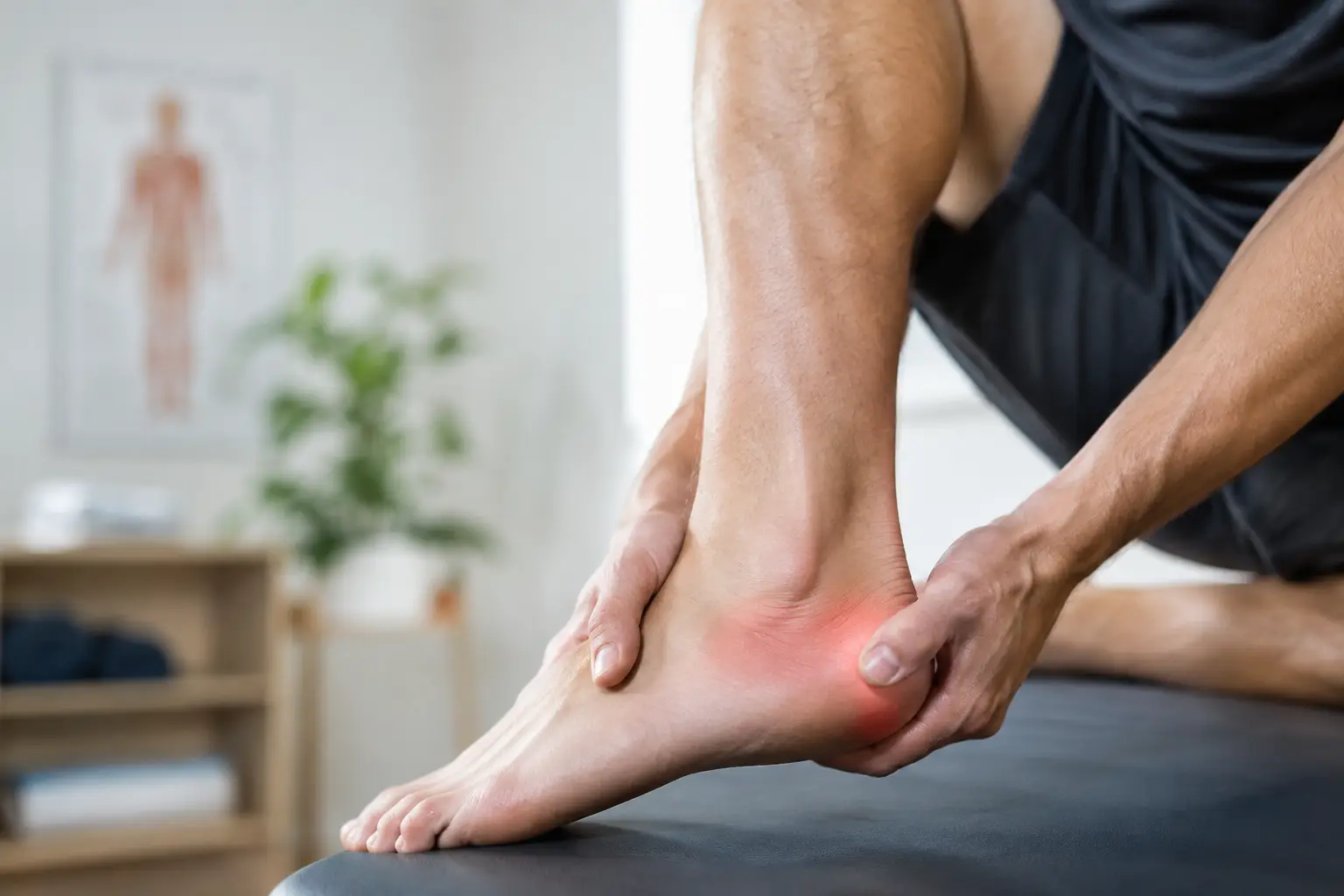
The patient was a recreational runner in their forties, running three to four times a week and preparing for a half marathon. They reported a gradual onset of pain under the inside of the right heel over approximately eight weeks. Initially, discomfort was limited to the first few minutes of a run and eased once warmed up. It later began to affect the first steps after getting out of bed and walking after sitting at a desk.
The runner had tried reducing mileage for a fortnight, rolling the foot on a ball and changing trainers. These measures provided short-term relief but did not resolve the problem. They were concerned that continuing to run could cause lasting damage, yet were equally reluctant to stop all activity without understanding what was injured.
This pattern may sound familiar, but it does not confirm plantar fasciopathy on its own. Heel pain can also be linked to irritation of the heel fat pad, nerve sensitivity, a bone stress injury, tendon involvement or referred pain from elsewhere in the lower limb. The location, timing and behaviour of symptoms must be assessed together.
Runner heel pain case study: the assessment process
The appointment began with a detailed history. The aim was not simply to establish where it hurt, but how the pain had developed and what was loading the area.
The patient had increased weekly distance by around 25 per cent over six weeks, while also adding hill sessions. Their work involved long periods standing, recovery sleep had been inconsistent, and a previous calf strain had led them to reduce calf strengthening. None of these factors alone explained the pain. Together, they suggested a rapid rise in load without the lower limb having fully adapted.
A podiatry examination then considered walking and running-related function, ankle range of motion, calf capacity, foot posture, footwear, tenderness and the response to specific loading tests. The most localised tenderness was at the medial calcaneal tubercle, the common attachment point of the plantar fascia. Pain was reproduced by extending the toes and loading the fascia, while the Achilles tendon itself was not tender.
There were also useful negative findings. The patient had no night pain, no marked swelling or bruising, no sudden traumatic event and no pain on a calcaneal squeeze test. These findings reduced concern for a more acute bony injury, although clinical judgement always determines whether further investigation is required.
The preliminary diagnosis was plantar fasciopathy. However, the symptoms had persisted despite sensible self-management and the runner wanted clarity before committing to a treatment plan. Diagnostic ultrasound was therefore used as part of the consultation.
What ultrasound added
Ultrasound showed thickening and changes in the plantar fascia near its heel attachment, consistent with plantar fasciopathy. There was no significant fascial tear and no ultrasound evidence suggesting that the main problem was at the Achilles insertion.
This mattered for two reasons. First, it supported the clinical findings and gave the patient a clear explanation for their pain. Secondly, it helped keep treatment proportionate. A suspected tear, significant tear-related change or a different source of heel pain would have altered the advice, expected recovery timeline and possible onward investigations.
Ultrasound is not required for every runner with heel pain. Many straightforward cases can be diagnosed clinically. It is particularly useful when symptoms are persistent, the picture is unclear, treatment has not worked as expected, or the findings may change the treatment pathway.
Why rest alone was not the answer
Complete rest can reduce symptoms temporarily, but plantar fascia tissue also needs carefully managed load to recover. The goal was to reduce aggravation while maintaining enough activity to preserve fitness and rebuild capacity.
The patient was advised to pause hill repetitions, speed work and long runs for a short period. Easy running was retained only if pain stayed within an agreed, manageable level during the session and had settled back to baseline by the following morning. If morning pain became noticeably worse or walking was affected, that was a sign the previous load had been too high.
This is where generic advice often falls short. “Rest it” can be too vague, while “run through it” can prolong a reactive problem. The appropriate level of activity depends on symptom severity, running goals, tissue response and the wider training picture.
The treatment plan: targeted, not one-size-fits-all
The initial plan focused on reducing strain at the painful attachment and improving the calf-foot complex’s tolerance to load. It included supportive footwear guidance, temporary heel cushioning where appropriate and a structured home programme.
The rehabilitation programme began with calf and plantar fascia-specific loading that the patient could perform without a significant symptom flare. Calf strength was especially relevant because limited calf capacity and reduced ankle movement can increase demand through the plantar fascia during running. The exercises were progressed gradually as pain and function improved.
Manual treatment and fascial manipulation were considered as adjuncts to improve comfort and movement where clinically indicated, but they were not presented as a substitute for rehabilitation. Similarly, orthoses can be useful for some runners, particularly where foot mechanics or load distribution are contributing factors, but they are not automatically necessary for every case of plantar heel pain.
The patient was also asked to avoid prolonged barefoot walking on hard floors during the more painful stage. This was a practical change rather than a permanent restriction. The aim was to remove repeated irritants while rehabilitation was taking effect.
When injections may be considered
Injection treatment is sometimes discussed for persistent plantar heel pain, but it should follow a diagnosis-led conversation. A steroid injection may offer pain relief in selected cases, yet it is not the first answer for every runner and has potential risks, including tissue weakening. The likely benefits, alternatives and recovery requirements should be considered carefully.
Other treatment options may be appropriate depending on the diagnosis, duration of symptoms and previous response to care. The key point is that an injection should address a defined clinical problem, not simply be used because pain has lasted a few weeks.
The return to running
Over the following weeks, the patient’s first-step pain reduced and walking became comfortable. Running was reintroduced in stages, beginning with shorter, flatter easy runs on non-consecutive days. Distance was increased before intensity, and hills were added later.
The half marathon target was reviewed realistically. The patient could return to running, but chasing the original race pace while symptoms were still settling would have increased the risk of a setback. Adjusting the target was not a failure of treatment. It was a sensible decision based on tissue recovery and the available time.
A useful return-to-running plan should account for more than mileage. Surface, elevation, pace, recovery days, strength work and standing time at work can all influence total load. A runner who feels fine during one session may still be doing too much overall if symptoms are worse the next morning.
What this case shows about heel pain in runners
The diagnosis in this scenario was plantar fasciopathy, but the more important lesson is that a familiar symptom does not always have a simple cause. The right plan came from combining the history, physical examination and ultrasound findings, then matching treatment to the runner’s actual needs.
If heel pain is persisting, recurring or changing the way you walk or run, an assessment can replace guesswork with a structured plan. The most helpful next step is usually not doing more of everything, but understanding precisely what your heel is asking you to change.


